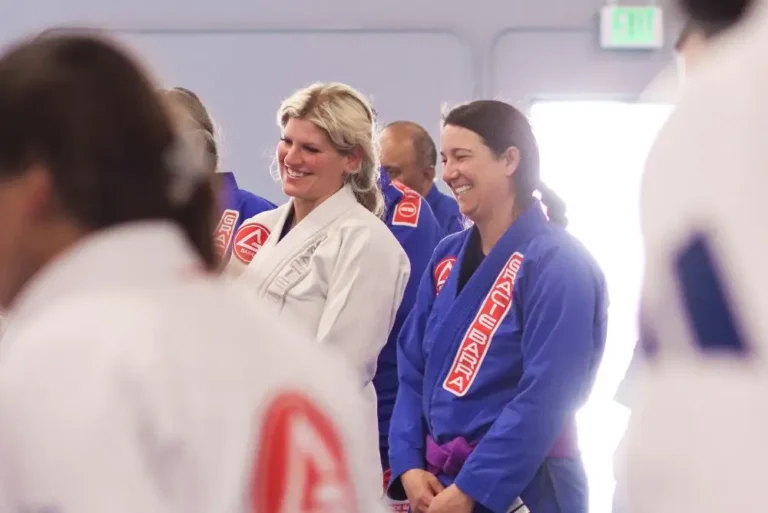
Hi, I’m Professor Valerio Ubaldini, head professor at Gracie Barra Denver.
You searched for the best Brazilian Jiu-Jitsu in Denver and you found a list of gyms all claiming to be exactly that. Not useful.
So instead of telling you we’re the best, I’m going to tell you what actually separates a good academy from a bad one — including a section on when we’re the wrong choice for you. Take this list to any school in the Denver metro, including ours, and you’ll be able to judge for yourself within one visit.
What Actually Matters When You Choose a BJJ Academy
1. Who is teaching, and are they actually there?
Find out who runs the school and whether that person is on the mat regularly. Some academies are named after a well-known black belt who teaches a handful of times a year while everything else is run by less experienced staff.
That’s not automatically bad — plenty of great instructors came up that way. But you should know who you’ll actually be learning from before you sign anything.
Ask: Who teaches the beginner classes? Is the head instructor on the mat during the times I’d be training?
2. Is there a real beginner class?
This is the single biggest predictor of whether you’ll still be training in six months.
Schools that drop new students straight into the general class lose most of them. You spend eight weeks confused, exhausted, and getting crushed, and eventually you stop showing up. It’s not a character flaw — it’s a structure problem.
A proper beginner program teaches the fundamentals in sequence, with people at your level, before you’re rolling with experienced students.
Ask: Do beginners have their own class, or does everyone train together?
3. Is there a curriculum, or does it depend on the day?
Some schools teach whatever the instructor felt like that morning. You’ll learn things, but the gaps stay invisible for years.
A curriculum means techniques are taught in a deliberate order, revisited on a cycle, and connected to each other. It also means that if you miss two weeks, you know exactly what you missed.
Ask: Is there a set curriculum? How does it cycle?
4. What does the room feel like at 7pm on a Tuesday?
Not during a trial class where everyone’s on best behavior. Ask to watch a regular evening class.
Good signs: upper belts correcting lower belts patiently, people laughing between rounds, mixed ages and body types, a clean mat, someone checking in with the visitor by the door.
Bad signs: injuries every week treated as normal, egos in live training, an instructor who berates people, an all-young-athletic-male room with nobody over 35, a mat that smells.
That last one matters more than you’d think. Mat hygiene is a direct proxy for how well the place is run.
5. Can you train at the times you can actually train?
The best academy in Colorado is useless if its beginner classes are at 11am and you work at 11am.
Look at the schedule against your real life — not the version of your life where you’re free four nights a week. And check the drive. A school 25 minutes away that you’ll skip on bad-weather days is worse than a solid school 8 minutes away.
Ask: How many beginner-appropriate classes fall in the window I can actually make?
6. Is the pricing transparent before you walk in?
You should be able to find out what things cost without sitting through a pitch.
Watch for: long lock-in contracts with hard cancellation terms, big enrollment fees, mandatory belt-testing fees, or pressure to sign during the trial class. None of these mean a school is bad, but all of them should be disclosed clearly and in writing.
Ask: What’s the monthly rate, what’s the commitment term, and what does it cost to cancel or freeze?
7. Does the belt actually mean something?
Belt standards vary a lot between schools. A blue belt from a school with rigorous standards and a blue belt from a school that promotes on attendance alone are not the same thing.
This won’t matter to you in month one. It matters a great deal in year three, when you visit another gym or compete and find out where you really stand.
Ask: What’s required to earn a stripe or a belt here?
8. Are there people like you on the mat?
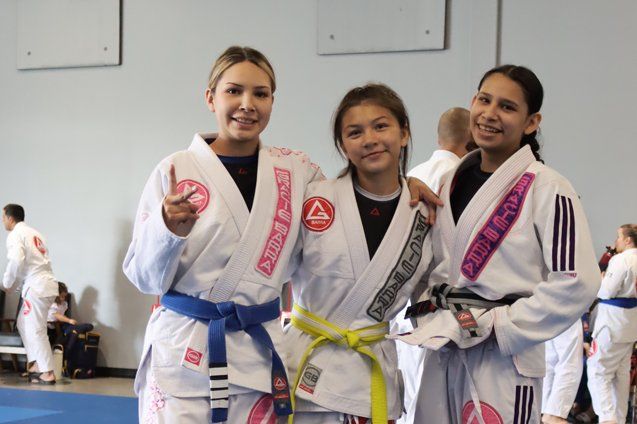
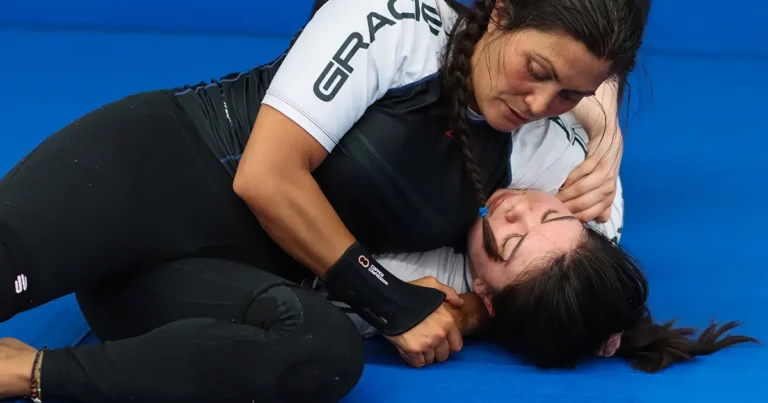
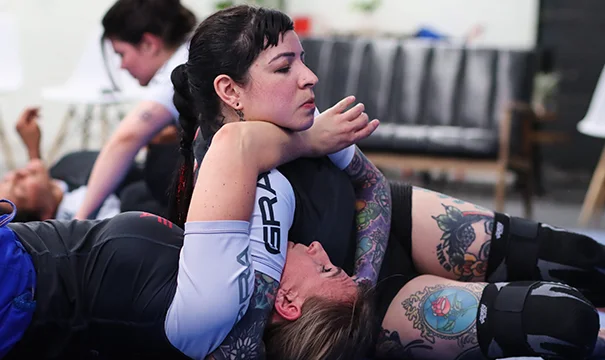
If you’re 45 and every student is 24, you’ll struggle to find training partners who train the way you need to train. Same if you’re a woman and there are no other women, or a parent hoping to train alongside your kid.
Look for a room with range — different ages, sizes, and fitness levels. It’s a sign the school teaches in a way that works for regular people, not just athletes.
9. What happens if you get injured or need to pause?
Everyone misses time eventually — an injury, a work trip, a new baby. Find out now whether the school has a freeze policy or whether you keep paying for months you can’t train.
Red Flags Worth Walking Away From
A few things I’d treat as disqualifying, at any school:
- Pressure to sign on the spot. A good academy is fine with you thinking about it.
- No trial class. If you can’t try before you buy, ask why.
- An instructor who can’t clearly explain their lineage. Not gatekeeping — just basic verifiability in a sport where credentials matter.
- Beginners getting hurt regularly. This means the room isn’t being supervised properly.
- Contempt for other schools. An instructor who spends the tour tearing down the gym down the road is telling you something about their own confidence.
- A mat that isn’t cleaned daily. Skin infections are the most common preventable problem in this sport.
When Gracie Barra Denver Is the Right Fit
We’re a good fit if:
- You’re a complete beginner. Our structure is built for people starting from zero. This is what we do best.
- You want a clear path. The Gracie Barra curriculum is the same across 1,300+ schools worldwide, refined by Grand Master Carlos Gracie Jr. over more than forty years. You always know what you’re working on and why.
- You’re training for life, not for a medal. Most of our students never compete. Competition is available through the Gracie Barra CompNet circuit if you want it, and entirely optional if you don’t.
- You travel. Your membership connects you to a global network — you can train at Gracie Barra schools in most major cities.
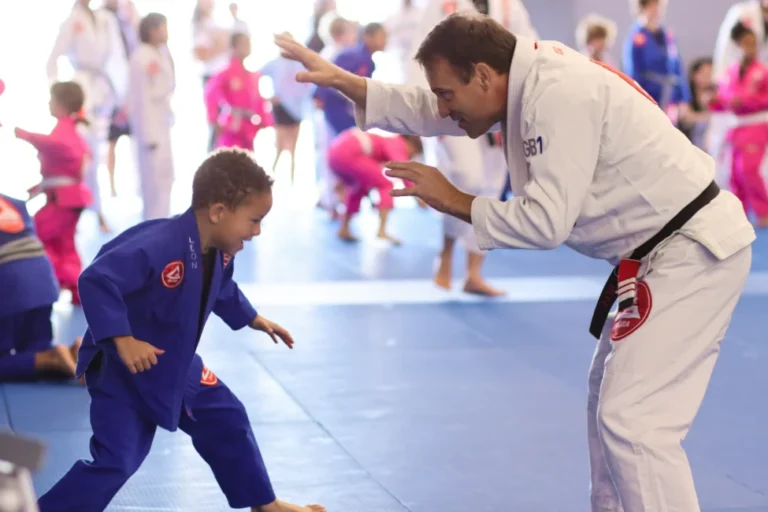
- You want a room with range. Adults across a wide age span, athletes and non-athletes, plus kids and women’s programs.
When We’re Probably Not
I’d rather you find the right place than sign with us and quit in four months.
- You want to compete at a high level, immediately. We have a competition team and a real circuit, but if your goal is elite-level competition as your primary reason for training, there are Denver gyms built specifically around that focus. Go look at them.
- You want no-gi only. We teach No-Gi, but the Gracie Barra curriculum is gi-centered. If you never want to wear a gi, a dedicated no-gi or submission-grappling gym will suit you better.
- Our schedule doesn’t fit your life. No amount of quality survives you not being able to attend. Check our schedule against your week honestly before anything else.
- You want a martial art with striking. BJJ has no striking. If that’s what you’re after, look at boxing, Muay Thai, or an MMA gym — we cover the difference in our piece on BJJ vs MMA.
How to Compare Two or Three Schools in One Week
Here’s the process I’d use if I were choosing today.
- Shortlist three schools within a realistic drive. Distance is the most underrated factor in whether you keep training.
- Check reviews for patterns, not scores. One angry review means nothing. Three reviews mentioning the same billing problem means something.
- Take a free trial class at each one. Not a tour — an actual class.
- Notice how you’re treated as a beginner. Did someone show you where to put your shoes? Did anyone check on you between rounds? That’s the culture, and it’s the same culture you’ll be in every week.
- Ask the pricing and cancellation questions out loud. Watch how comfortable they are answering.
- Pick the one you’d still go to on a cold Tuesday when you don’t feel like it. That’s the only criterion that ends up mattering.
Try a Free Class at Gracie Barra Denver
We serve Denver and the surrounding Colorado communities from [Studio Address].
Your first Brazilian Jiu-Jitsu class is free — a real class, not a sales tour. Wear shorts and a t-shirt with no zippers or pockets, bring water, arrive ten minutes early, and we’ll lend you a gi.
Come compare us against this list. If we’re not the right fit, I’d genuinely rather tell you that than sign you up.
[Book your free class here]([Booking Link]) or call [Phone].
— Prof. Valerio Ubaldini, Gracie Barra Denver
Frequently Asked Questions
How much does Brazilian Jiu-Jitsu cost in Denver?
Rates in the Denver metro generally fall in a typical range for martial arts memberships, and vary with class access, contract length, and whether a gi is included. Ask any school for the monthly rate, the commitment term, and the cancellation and freeze terms in writing before you sign. [confirm: incluir faixa de preço da GB Denver ou link para página de membership]
How do I know if a BJJ instructor is legitimate?
A black belt should be able to tell you who promoted them and trace their lineage back through recognized instructors. Affiliation with an established organization adds another layer of verification, since certification and standards are held centrally.
Should I choose a gi or no-gi school as a beginner?
Gi training is generally the better starting point. The gi slows everything down and forces you to rely on technique and grips rather than speed and athleticism, which builds a more precise foundation. Most gi schools also offer no-gi classes.
How many times a week should a beginner train?
Two to three classes a week is ideal. It’s enough to retain what you learn and build conditioning, without the burnout or injury risk that comes from training daily as a brand-new student.
Do I need to be fit before starting Jiu-Jitsu?
No. Jiu-Jitsu builds a specific kind of conditioning that only training develops. Every class is scalable, and beginners are expected to sit out rounds when they need to.
What’s the difference between Gracie Barra and other BJJ schools?
Gracie Barra schools share a standardized curriculum, certified instructor requirements, and consistent program structure worldwide, so the experience is comparable from one school to another. Independent academies vary far more — sometimes for better, sometimes for worse, depending entirely on the individual instructor.