Quick answer: Brazilian Jiu-Jitsu (BJJ) is a grappling-only martial art focused on ground control and submissions. MMA is a full combat sport that combines striking, wrestling, and BJJ together inside a cage. They’re not really competitors — BJJ is a core building block of MMA, which is exactly why most beginners, even future MMA fighters, start there.
Ask around Gracie Barra Denver and you’ll hear the same question from almost every new student: should I start with Jiu-Jitsu, or should I just jump straight into MMA? It’s a fair question, but it’s built on a small misunderstanding. BJJ and MMA aren’t really two separate paths competing for your time — one is actually part of the other. Once you understand how they fit together, the “where do I start” question gets a lot easier to answer. Here’s what each one actually involves, why almost every coach points beginners toward grappling first, and when MMA training makes more sense right away.
What’s the Difference Between BJJ and MMA?
Let’s clear up the confusion first, because BJJ and MMA aren’t actually competing categories.
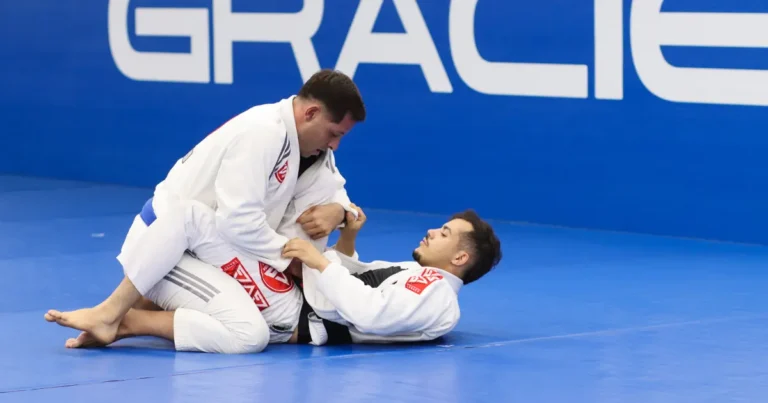
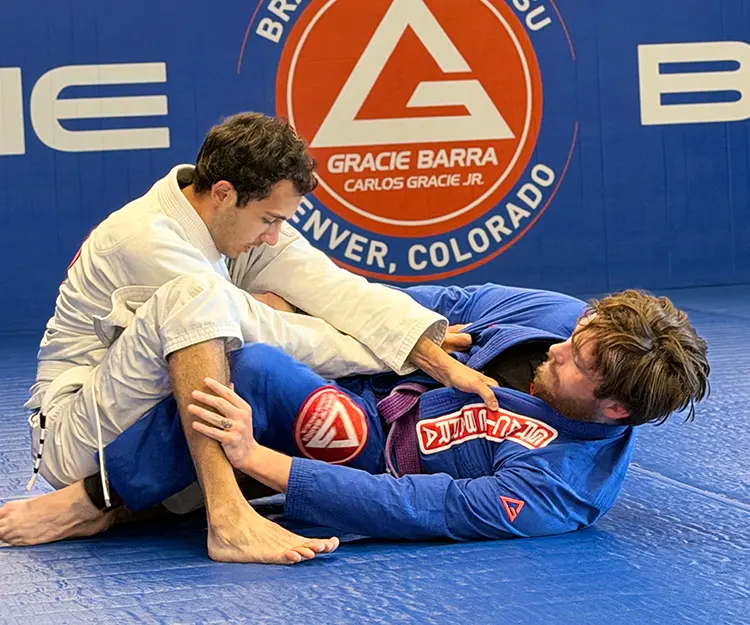
Brazilian Jiu-Jitsu is a grappling martial art. Training happens on the ground and focuses entirely on position, control, and submissions like chokes and joint locks. There’s no punching or kicking. You can train it in a gi (traditional uniform) or No-Gi (rash guard and shorts), and competitions are scored on position and submissions, not strikes.
MMA (Mixed Martial Arts) is a full combat sport. It combines striking (boxing, Muay Thai), wrestling (takedowns and control), and grappling (BJJ) into one system, fought inside a cage or ring. An MMA fighter needs to be dangerous standing up, dangerous on the ground, and skilled at controlling where the fight actually happens.
That last part is the key: BJJ is one of the three pillars MMA is built on. Every serious MMA gym teaches grappling, and most of that grappling curriculum is Brazilian Jiu-Jitsu. So the real comparison isn’t “BJJ or MMA” — it’s closer to “do I want to train one piece of the puzzle deeply, or train the whole picture at once?”
| BJJ | MMA | |
|---|---|---|
| Focus | Ground control and submissions only | Striking + wrestling + grappling combined |
| Contact level | Live grappling, no strikes | Live striking and grappling |
| Gear | Gi or rash guard/shorts | Gloves, shorts, mouthguard |
| How you win | Submission or points | Knockout, submission, or points |
| Best for beginners | Yes — lower injury risk while learning | Steeper learning curve early on |
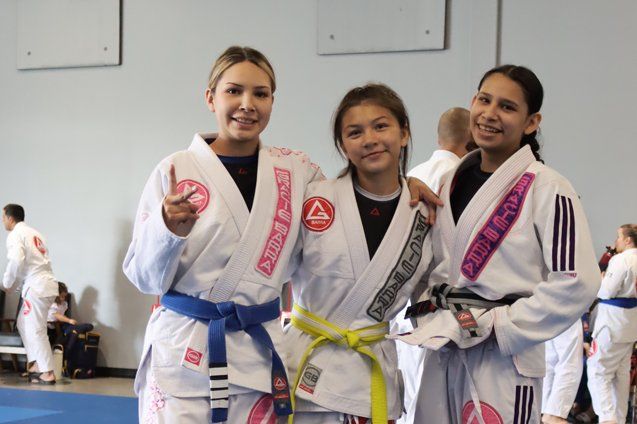
One more practical difference: BJJ has a globally recognized belt system (white, blue, purple, brown, black) that tells you exactly how experienced a training partner is just by looking at them. Most MMA gyms don’t use belts at all, since MMA itself doesn’t have a formal ranking system the way grappling arts do.
Neither one is objectively “harder.” They’re just training for different goals — and as you’ll see below, one of them is usually the smarter place to actually begin.
Why Most Gyms (Including MMA Gyms) Start Beginners With BJJ
Walk into almost any serious MMA gym and ask what a brand-new student trains first. The answer is almost always the same: grappling.
There’s a practical reason for this. Striking at full speed and power is genuinely risky for someone with zero experience — timing, distance, and defense all take months to develop safely. Ground grappling lets a beginner drill real technique against real resistance from day one, without the same risk of getting caught by a hard shot before they know how to defend it.
BJJ also builds something that transfers directly into MMA: the ability to stay calm and think clearly when someone bigger or stronger is actively trying to control you. That skill doesn’t come from watching or reading about it. It only comes from time spent actually training it, and BJJ is built specifically to teach it, safely, from the very first class.
This isn’t just true for future competitors, either. The same reasoning applies if your only goal is fitness or self-defense. Grappling gives you an immediate, honest measure of whether a technique actually works, because your training partner is genuinely resisting. That kind of real feedback is hard to get from a class where nobody is allowed to fully resist yet.
This is exactly why Brazilian Jiu-Jitsu built its reputation as the great equalizer of combat sports: a smaller, technical grappler can consistently control a bigger, stronger opponent. That’s not a marketing line — it’s the entire foundation the art was built on, and it’s a big part of why so many MMA fighters credit their BJJ training as the skill that actually won them fights.
What Beginners Actually Get from Starting in BJJ
Real Self-Defense, Not Just Theory
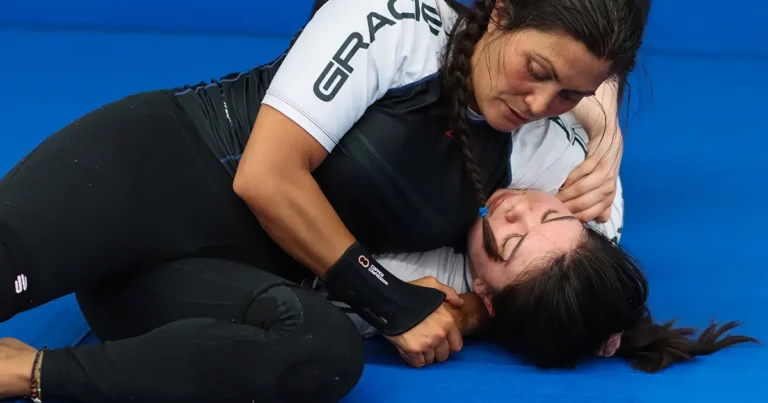
Most real altercations end up in a clinch or on the ground, whether anyone planned for that or not. BJJ trains you specifically for that scenario — how to control an attacker, defend yourself from underneath, and neutralize a threat without needing to land a single strike.
A Genuine Fitness and Conditioning Boost
Rolling is a full-body workout every time. You’ll build strength, flexibility, and cardio without ever stepping into a traditional gym routine, and most students notice a real difference within their first month of consistent training.
A Mental Game You Can’t Get from a Book
Staying calm while someone is actively trying to control you is a skill, and it’s one BJJ trains every single class. That composure under pressure is the single most common thing students say carries over into their work and personal life.
A Lower-Pressure Entry Point
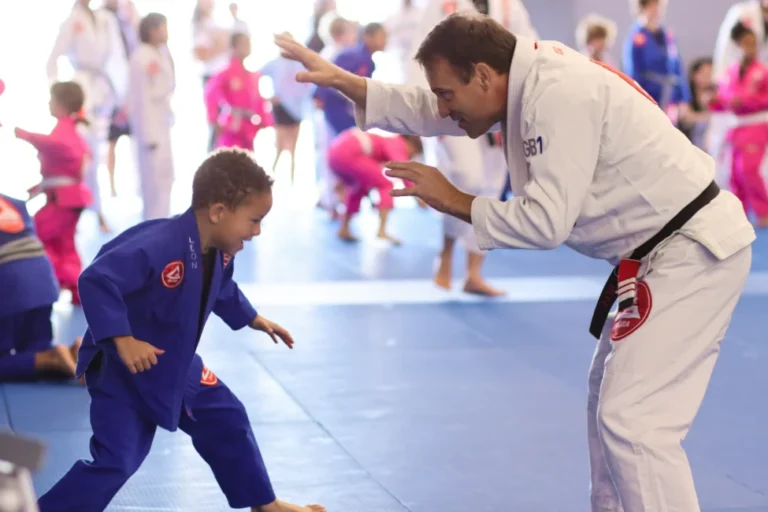
Starting in a full-contact MMA class on day one means sparring strikes almost immediately. Starting in BJJ means you can drill technique at a controlled pace, build real skill, and work up to higher-intensity live rolling once you’re actually ready for it — a genuinely less intimidating way for most beginners to start.
It Teaches You How to Handle Losing
Every single class, you’ll get caught in something you couldn’t escape. That happens to everyone, from total beginners to black belts. Learning to reset, stay calm, and try again — without your ego taking over — is one of the most underrated skills BJJ teaches, and it’s a big part of why so many students say training changed how they handle setbacks outside the gym too.
How Long Until You Feel Confident?
This is usually the real question underneath “where do I start” — how long until this actually feels natural?
In BJJ, most students report feeling genuinely comfortable with the basics (escapes, guard, basic control) within their first three to six months of consistent training, two to three classes a week. Real proficiency, where positions start to feel automatic instead of overwhelming, usually takes a year or more. BJJ uses a belt system specifically because progress is gradual — reaching black belt commonly takes eight to twelve years of serious training.
MMA timelines are harder to generalize, because you’re building three skill sets (striking, wrestling, grappling) at once instead of one. Most MMA gyms expect a longer runway before a student is ready to safely spar at full intensity across all three ranges, simply because there’s more to learn before everything works together.
This is actually another reason BJJ makes sense as a starting point: it gives you an early, measurable sense of progress — a new position you can now escape, a new submission you can now land — while you’re still building toward the bigger, combined skill set that MMA eventually asks for.
When Might MMA Be the Better Starting Point?
BJJ isn’t automatically the right call for everyone, and it’s worth being honest about that.
If your specific goal is competing in MMA itself, you’ll eventually need striking and wrestling too, not just grappling. Someone who already has a striking background — boxing, Muay Thai, kickboxing — and wants to fill in the grappling gap might genuinely be better served jumping into an MMA gym’s full curriculum right away, rather than spending a year on BJJ alone first.
MMA training can also just be a better personal fit. Some people are motivated by the variety of skills, the faster pace, or the specific goal of stepping into a cage someday. If that’s the actual goal, waiting a year to “get good enough” at BJJ first isn’t necessary — you can build all three skill sets side by side.
There’s also a time and cost consideration worth being honest about. Training three disciplines at once generally means more classes per week and a bigger investment of both time and money than focusing on BJJ alone. For some people, that full commitment is exactly what they want from day one. For most beginners, though, starting narrower and adding disciplines later tends to be the more sustainable path.
Even so, most MMA coaches will still tell you the same thing Gracie Barra Denver does: whatever else you train, get a real grappling foundation early. It’s the piece that’s hardest to fake once you’re actually in a live, resisting situation.
Gracie Barra Denver
At Gracie Barra Denver, every beginner starts with the fundamentals of Brazilian Jiu-Jitsu, taught by instructors certified through the Gracie Barra Instructor Certification Program (ICP). The academy is led by Head Professor Valerio Ubaldini, whose own training traces back through Professor Jefferson Moura, a 6th-degree black belt from Rio de Janeiro, to the Gracie family lineage itself.
Classes are structured to build progressively — you’ll start with fundamentals (positions, escapes, basic submissions) before moving into live rolling, so nothing gets thrown at you before you’re ready for it. Both gi and no-gi classes are available, so you can find the training style that fits you best.
Whether your long-term goal is self-defense, competition, general fitness, or eventually cross-training into MMA, the starting point is the same: a real grappling foundation, taught properly, at a pace that matches where you’re actually at.
The best way to find out if it’s the right fit is to feel it for yourself. A free trial class costs you nothing and gives you a real answer, faster than any article can.
Frequently Asked Questions
Is Brazilian Jiu-Jitsu a good starting point if I have zero martial arts experience?
Yes — it’s actually the most common starting point, even for people who eventually want to train MMA. Classes are built for complete beginners, and the pace of learning is controlled, not rushed.
Do I have to choose between BJJ and MMA permanently?
No. Most students start with BJJ to build a foundation, then decide later whether to add striking and wrestling. Nothing about starting in BJJ locks you out of training MMA down the road — if anything, it gives you a head start on one of the three core skill sets you’d need anyway.
Is BJJ actually useful if my goal is real self-defense, not competition?
Yes. Most real-world physical confrontations end up in a clinch or on the ground, which is exactly the range BJJ trains. It’s widely considered one of the most practical self-defense systems for that reason.
Will I get hurt starting in MMA versus BJJ?
MMA training involves live striking, which naturally carries more contact risk for a total beginner than grappling does. That’s a big part of why most gyms ease new students in through BJJ fundamentals first, building control and timing before adding strikes into the mix.
Do I need to be athletic or in shape to start?
No. BJJ is built around leverage and technique rather than raw athleticism, so people of any starting fitness level can begin and improve steadily.
Can I try a class at Gracie Barra Denver before committing to anything?
Yes. A free trial class is the easiest way to see the academy, meet the instructors, and decide if it’s the right starting point for you.
Ready to Try It Yourself?
Still deciding where to start? That’s exactly what a free trial class is for. Come try a real Brazilian Jiu-Jitsu class at Gracie Barra Denver, meet the team, and get your questions answered in person.