Quick answer: Brazilian Jiu-Jitsu (BJJ) is a grappling martial art focused on ground fighting and submissions. Instead of relying on strength, it uses leverage and technique, so a smaller person can control or submit a much bigger opponent. It’s used for self-defense, sport competition, and everyday fitness.
Ask anyone who trains at Gracie Barra Denver why people call Brazilian Jiu-Jitsu “the gentle art,” and you’ll probably get a laugh — there’s nothing gentle about getting caught in an armbar. But the name actually makes sense once you understand how BJJ works. It’s not about landing hard punches or kicks. It’s about controlling your opponent’s body and using their own weight and momentum against them, until they tap out. That’s what makes it one of the most effective self-defense systems in the world, and one of the fastest-growing sports too. Here’s what it actually is, where it came from, and why it works.
Where Did Brazilian Jiu-Jitsu Come From?
Brazilian Jiu-Jitsu started in Brazil in the early 1900s. A Japanese judo champion named Mitsuyo Maeda taught his grappling techniques to Carlos Gracie. Carlos, along with his brother Hélio Gracie, adapted what they learned into a system built on leverage and technique instead of size and strength. That system became Brazilian Jiu-Jitsu.
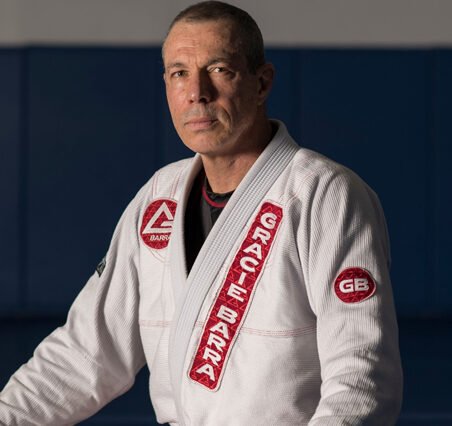
Decades later, in 1986, Carlos Gracie’s son — Master Carlos Gracie Jr. — founded Gracie Barra and passed the same knowledge down through generations of black belts. At Gracie Barra Denver, that lineage runs through Professor Jefferson Moura, a 6th-degree black belt from Rio de Janeiro, and Head Professor Valerio Ubaldini, who leads the Denver academy today.
How Does Brazilian Jiu-Jitsu Actually Work?
BJJ is built around ground fighting. Instead of staying on your feet and trading strikes, you learn how to take the fight to the ground, where technique matters more than size.
Once there, training focuses on a few core ideas:
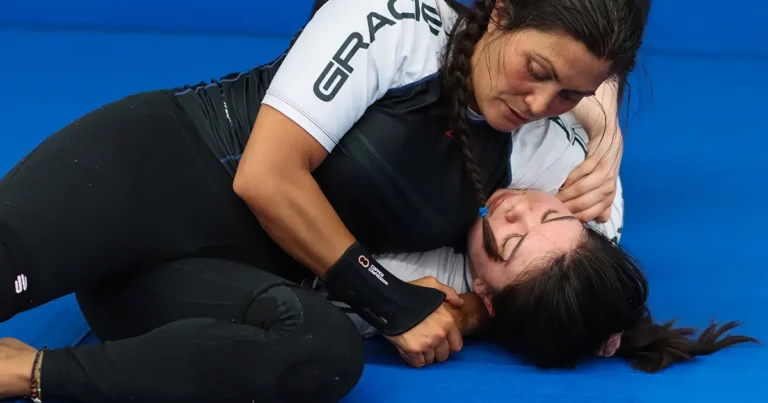
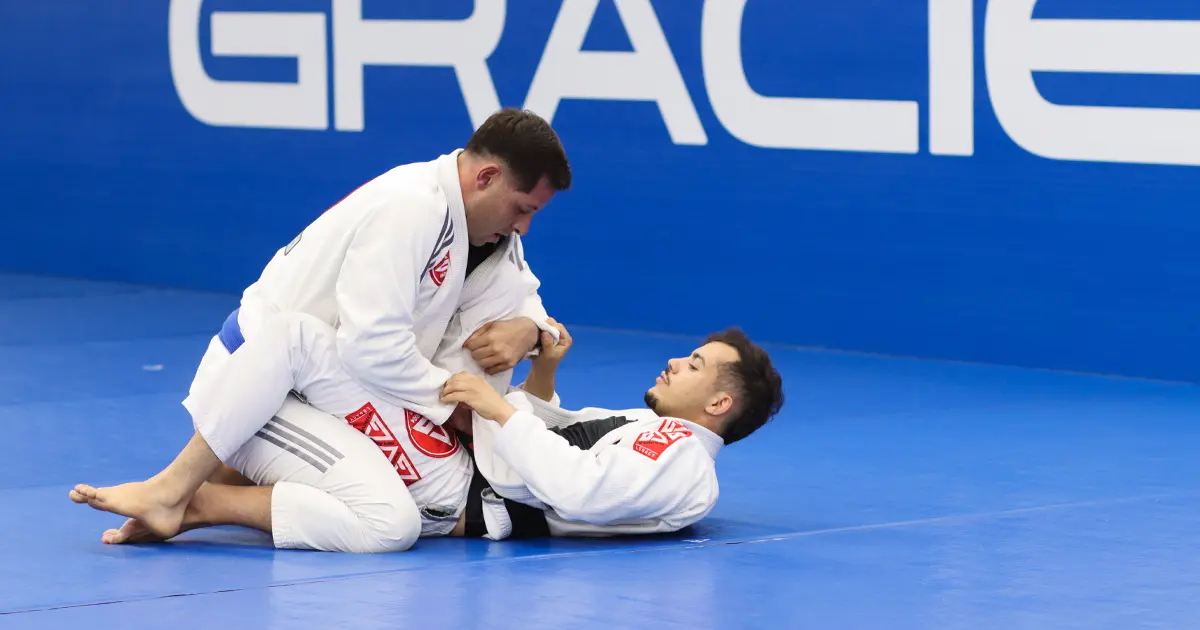
- Position — controlling where you and your opponent are, like being on top in mount or side control, or defending from guard underneath.
- Control — using your weight and body position to limit what your opponent can do next.
- Submission — ending the roll with a choke or joint lock (like an armbar), forcing your opponent to tap out before anyone gets hurt.
You’ll hear these words constantly in class: mount, guard, side control, choke, armbar. They sound like a lot at first, but they’re really just names for a small handful of positions and techniques that show up again and again.
Why Leverage Beats Strength in BJJ
The core idea behind BJJ is leverage. Instead of muscling through a bigger opponent, you learn to use angles, weight distribution, and timing to control someone much stronger than you.
This is why BJJ works for almost anyone, regardless of size, age, or athletic background. Technique and strategy matter more than raw strength. It’s also a mental game — students learn to stay calm, think a few steps ahead, and solve problems under pressure, skills that carry over well beyond the mat.
Why BJJ Works So Well for Self-Defense
Most real-world altercations end up on the ground, whether people plan for that or not. BJJ trains you specifically for that scenario: how to control an attacker’s movements, defend yourself from underneath, and neutralize a threat using submissions instead of strikes.
Training also builds something less obvious but just as useful: composure. Students practice staying calm and breathing steadily while someone is actively trying to control them, which builds real confidence and stress management, not just physical skill.
More Than a Sport: The BJJ Lifestyle
Gracie Barra has always treated BJJ as more than just technique. The philosophy behind it emphasizes discipline, a healthy lifestyle, and staying connected to family and community. Training regularly builds confidence and self-respect that students carry into everyday life, on and off the mat.
Gracie Barra Denver
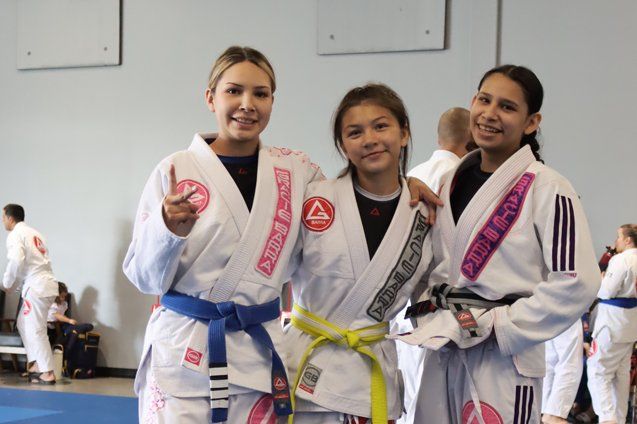
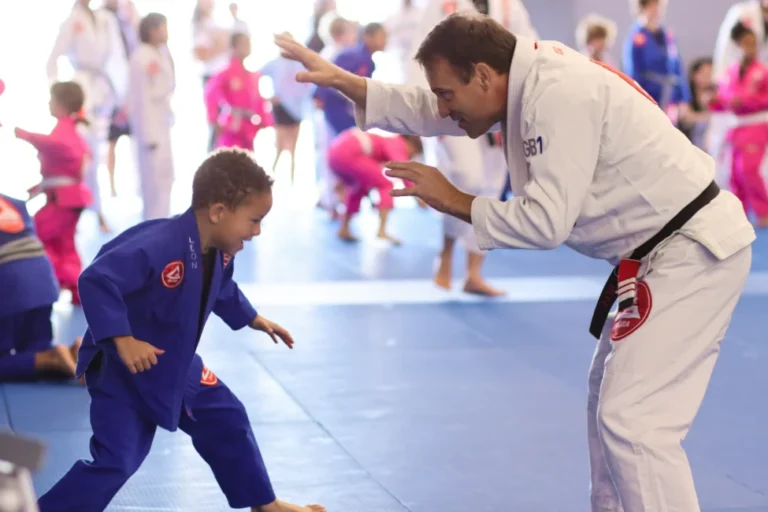
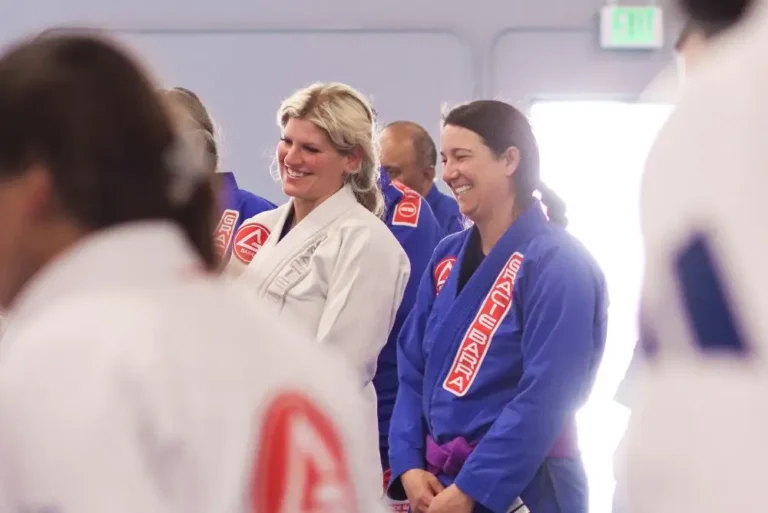
At Gracie Barra Denver, every instructor is certified through the Gracie Barra Instructor Certification Program (ICP), so you’re learning the same method taught in Rio de Janeiro over 40 years ago. Classes are open to every experience level, from complete beginners to advanced competitors, and to kids, teens, and adults alike.
Head Professor Valerio Ubaldini leads the academy, continuing the same lineage and teaching philosophy the Gracie family built over a century ago.
Frequently Asked Questions
What does “BJJ” stand for?
BJJ stands for Brazilian Jiu-Jitsu, a grappling-based martial art developed in Brazil in the early 1900s.
Is Brazilian Jiu-Jitsu good for self-defense?
Yes. BJJ is widely considered one of the most effective martial arts for real-world self-defense, since it trains you to control an opponent even if the fight ends up on the ground.
Do I need to be strong or in shape to start BJJ?
No. BJJ is built around leverage and technique, not strength, so people of any size or fitness level can start and improve quickly.
What’s the difference between BJJ and other martial arts?
Most striking-based martial arts focus on punches and kicks. BJJ focuses on ground fighting, control, and submissions like chokes and joint locks, which makes it especially effective against a bigger or stronger opponent.
How long does it take to get good at BJJ?
Progress depends on how often you train, but most students notice real improvement within their first few months of consistent classes. BJJ uses a belt system to track long-term progress, and reaching black belt typically takes several years.
Can beginners join Gracie Barra Denver at any age?
Yes. Gracie Barra Denver offers classes for kids, teens, and adults at every experience level, from first-timers to advanced competitors.
Ready to Try It Yourself?
Reading about BJJ only gets you so far — the best way to understand it is to feel it. Come roll with us at Gracie Barra Denver and we’ll walk you through everything. No experience needed. Free trial class!