If you’ve been searching for kids jiu jitsu near me here in Denver, you probably have a few questions. And maybe a couple of worries, too.
That’s completely normal. Signing your child up for a martial art feels like a big decision. You want something safe. Something structured. Something your kid actually looks forward to on a Tuesday afternoon.
Here’s the short version: most of the scary stories parents hear about Brazilian Jiu-Jitsu for kids simply aren’t true. At Gracie Barra Denver, we hear the same seven myths almost every week. So let’s walk through them, one at a time.
Myth #1: “Jiu-Jitsu will turn my kid into a fighter”
The truth: Jiu-Jitsu teaches control, and control is the opposite of aggression.
This is the number one worry we hear from Denver parents. It makes sense. The word “martial art” sounds like fighting.
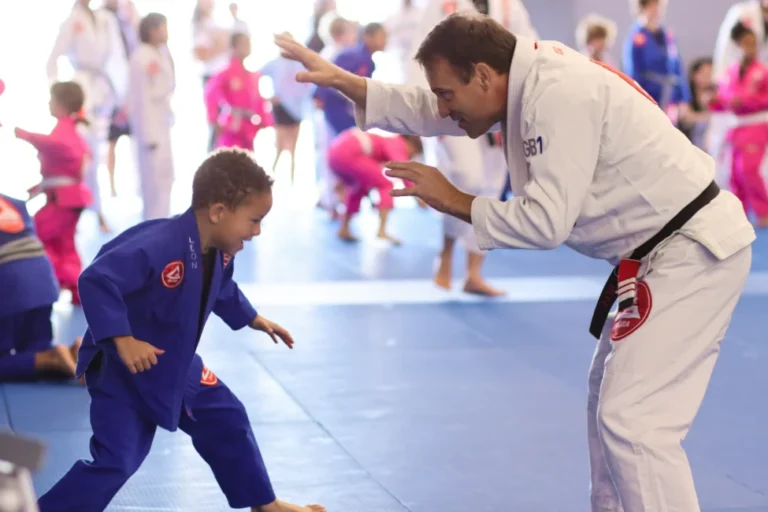
But Brazilian Jiu-Jitsu is built on leverage and technique, not on hitting people. Kids learn how to stay calm when someone is bigger, stronger, or louder than they are. That skill changes how they handle the playground, the bus, and the group chat.
In our kids’ classes, students practice:
- Staying calm when things get uncomfortable
- Solving a problem with position instead of force
- Setting boundaries with words first
- Walking away without feeling like they lost
Most parents tell us the same thing after a month or two: their child argues less at home. Confident kids don’t need to prove anything.
Myth #2: “The mats are too rough. My child will get hurt”
The truth: there is no punching or kicking in Brazilian Jiu-Jitsu.
That one sentence surprises a lot of families. Unlike striking arts such as boxing, karate, or taekwondo, BJJ is a grappling art. Everything happens through grips, balance, and control on the ground.
Kids also learn how to fall safely in the very first weeks, which is a skill that protects them at recess, at the skate park, and on their bike.
At our Denver school:
- Every drill is supervised by a certified instructor
- Practice rounds are light, slow, and matched by size and age
- Kids train with classmates at their own level, never with adults
- Our instructors are background checked, CPR-certified, and trained through the Gracie Barra Instructor Certification Program
Compare that to soccer, football, or basketball, where kids sprint into each other at full speed. Jiu-Jitsu is one of the safest youth sports a child can pick.
Myth #3: “My kid isn’t athletic. Or too shy. Or way too wild”
The truth: Jiu-Jitsu works for every kind of kid, and that’s the point.
You do not need a naturally sporty child. Most of the kids who walk through our doors have never finished a season of anything.
Quiet kids find a place where nobody yells and progress is personal. High-energy kids finally get to burn it all off with structure around it. Kids who learn differently do well here too, because instructions are short, visual, and repeated.
Our coaches focus on:
- One small technique at a time, broken into steps
- Effort over perfection
- Praise for showing up, not just for winning
- Small wins that stack into real confidence
We’ve watched shy Little Champions turn into kids who introduce themselves first. It happens more often than you’d think.
Myth #4: “Jiu-Jitsu is a boys’ sport”
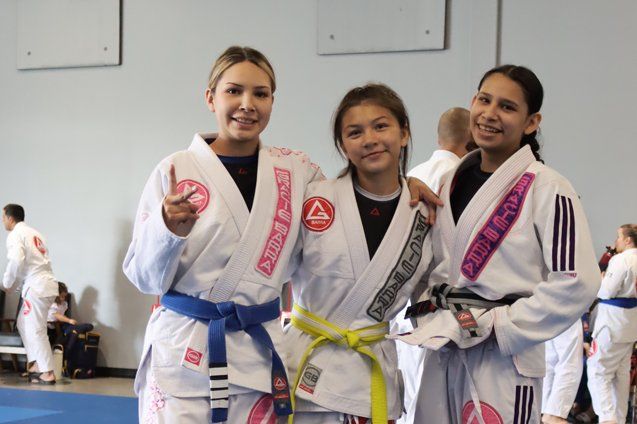
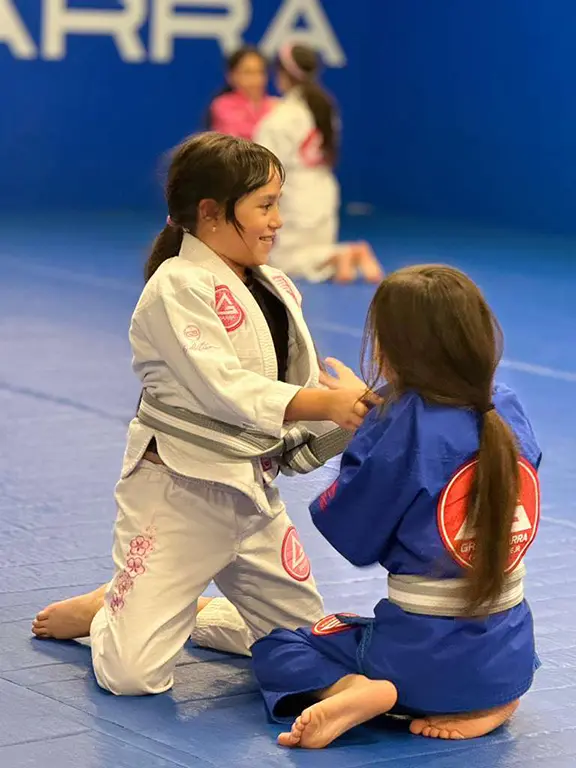
The truth: girls belong on the mats, and they do great here.
Martial arts used to have a boys-only reputation. That’s fading fast, in Denver and everywhere else.
Jiu-Jitsu is actually the martial art that makes the most sense for girls, because it was designed for a smaller person to control a bigger one. Technique beats size. That’s the whole idea.
Girls in our program learn:
- How to protect themselves if someone grabs them
- How to hold their ground without shouting or hitting
- That their body is capable, not fragile
- That strength is a skill you build, not something you’re born with
Many of them keep training into their teens, and some move on to our women’s Jiu-Jitsu classes later. It’s a nice path to be on.
Myth #5: “My kid is already 12. Isn’t it too late to start?”
The truth: ages 10 to 15 is one of the best windows there is.
Younger is not always better. Our Tiny Champions program starts at age 3, sure, but teens pick up Jiu-Jitsu fast because they can understand the why behind a move.
Middle school and high school are also when kids need this most. Social pressure gets heavier. Screens get louder. A structured training space with older role models is worth a lot right about then.
Our Juniors and Teens classes give students:
- Real technique taught step by step, not just conditioning
- A team of peers who share the same values
- A healthy way to handle stress and frustration
- Habits that show up in homework and in how they treat people
Starting at 12, or 14, is not late. It’s just the right time for that kid.
Myth #6: “It’s a phase. They’ll quit in a month”
The truth: the belt and stripe system is built to keep kids interested.
Kids quit activities when nothing seems to change. Jiu-Jitsu solves that with a clear, visible path.
Every student can see where they are and what’s next. Stripes come before belts. Belts come before the next belt. Progress is earned, so it feels real.
Under the hood, they’re building:
- Focus and attention span
- Patience with slow progress
- Respect for coaches, teammates, and rules
- The habit of finishing what they start
Gracie Barra uses the same structured curriculum in more than 1,000 schools worldwide, created under Master Carlos Gracie Jr. Your child isn’t guessing what comes next, and neither are we.
Myth #7: “Our schedule and our budget can’t take one more thing”
The truth: two classes a week is enough, and the first one is free.
We know Denver families are stretched. Between school pickup, work, and traffic on I-70, adding an activity sounds exhausting.
That’s why our kids’ class schedule runs on weekday afternoons and Saturday mornings. Twice a week is plenty to see real progress. You don’t need to buy a uniform to try it, either. We lend your child a clean gi for the first class.
And the payoff tends to spread out:
- Better behavior at home and in the classroom
- Real physical activity that isn’t a screen
- Friendships built on respect instead of status
- A calmer, more confident kid at dinner
For a lot of families, this ends up being the activity that makes the rest of the week easier.
What Makes Gracie Barra Denver Different
Gracie Barra is not just a gym. It’s a global Jiu-Jitsu team with a shared curriculum, shared standards, and a shared philosophy: Jiu-Jitsu for Everyone.
At our Denver location, that looks like:
- Age-specific programs from ages 3 through 15, so your child always trains with kids at their level
- An anti-bullying curriculum built into regular class time
- Certified instructors who know every student by name
- Clean, padded mats and a family-friendly space where parents are welcome to watch
Your child won’t get lost in a crowd here. That’s a promise we take seriously.
Book Your Child’s Free Trial Class in Denver
If you’ve been looking for Jiu-Jitsu classes for kids in Globeville, Elyria-Swansea, Sunnyside, RiNo, Five Points, Cole, Clayton, Park Hill, Commerce City, or Thornton, now’s a great time to come see the mats for yourself.
No gear needed. No experience needed. No pressure.
📍 4495 Washington St, Denver, CO 80216 — easy to reach from I-70 and I-25 👧 Ages 3 to 15 welcome 🧑🏫 Certified, background-checked instructors who specialize in kids 🧼 Clean, safe, family-friendly facility 🎯 The first class is always free
👉 Book your child’s free trial class here.
FAQ: Kids’ Jiu-Jitsu in Denver
1. What age can my child start Jiu-Jitsu at Gracie Barra Denver?
Kids can start at age 3 in our Tiny Champions program. From there, students move into Little Champions (ages 5–9) and Juniors & Teens (ages 10–15). Each group trains with kids at the same age and skill level.
2. What should my child wear to their first class?
Comfortable athletic clothes work fine for the first visit, like a T-shirt with shorts or leggings. We’ll lend your child a clean uniform (gi) so they get the full experience. You can read more about gi and no-gi gear here.
3. Is Brazilian Jiu-Jitsu safe for young children?
Yes. There’s no striking in Jiu-Jitsu, so no punches or kicks. Kids learn to fall safely from day one, practice rounds are light and supervised, and students are always matched by age and size.
4. How many times a week should my child train?
Two classes a week is enough for steady progress. Kids who train three times a week usually move a little faster, but consistency matters more than volume at this age.
5. My child is really shy. Will they be okay?
Absolutely. A lot of our students start out nervous. Our instructors are used to it, and the class structure gives shy kids a predictable routine and a partner to work with. Most kids relax within the first ten minutes.