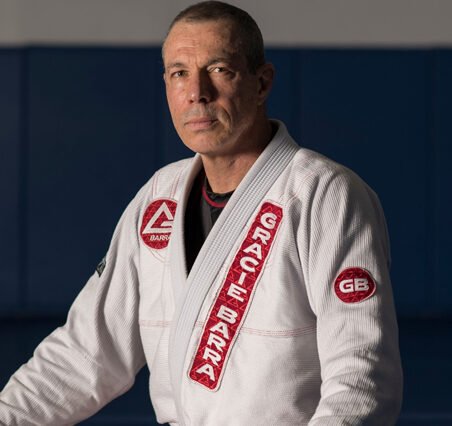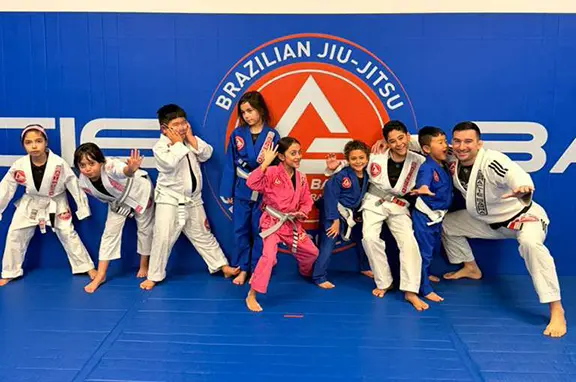
Hi, I’m Professor Valerio Ubaldini, head professor at Gracie Barra Denver. I’ve spent [X years] on the mats and I’ve watched hundreds of people walk through our doors for their very first Brazilian Jiu-Jitsu class.
I want to tell you something I don’t think gets said often enough.
The white belt is the hardest belt.
Not because the techniques are harder — they’re not. It’s the hardest because it’s the only phase where you have no reference point. You don’t know what “normal” feels like. You don’t know if you’re doing well or falling behind. Every class is new information, your body is sore in places you didn’t know existed, and a 140-pound teammate just held you down like you were furniture.
Most people who quit Jiu-Jitsu quit in the first three months. Almost none of them quit because they lacked talent. They quit because nobody told them what the beginning actually feels like.
So let me tell you.
The Things Nobody Warns a White Belt About
You will get tired in a way you’ve never been tired before
You can be a runner. You can lift five days a week. Your first live round will still empty your tank in ninety seconds.
Jiu-Jitsu fatigue is different. It’s grip fatigue, breath control, and the constant low-level panic of having weight on your chest. Add Denver’s altitude on top of that — we train a mile above sea level, and your lungs will remind you of it — and the first few weeks feel brutal.
This passes faster than you think. Usually four to six weeks. What’s actually happening is that your body is learning to stop fighting everything at once.
You will forget the technique thirty seconds after learning it
The professor shows a move. It makes perfect sense. You drill it four times. Then live training starts and your brain is completely blank.
This is not a memory problem. It’s a bandwidth problem. Early on, you’re spending all your attention on staying calm and not getting crushed, so there’s nothing left over for recall. Once the panic drops, the memory comes back on its own.
Everyone is going to tap you
Every single person in the room will submit you. Smaller people. Older people. The quiet guy who never says a word.
Here’s how I want you to read that: it’s information, not judgment. A tap means you found the edge of what you know. That’s the entire point of training. The students who progress fastest are the ones who tap early, reset, and go again. The ones who fight to the last second to avoid tapping get injured and learn nothing.
Your ego shows up before your body does
Most adults haven’t been genuinely bad at something in a long time. We build our lives around things we’re already competent at.
Jiu-Jitsu takes that away immediately. For a lot of people, that’s the real difficulty — not the cardio, not the technique. It’s sitting with being a beginner in front of other people.
I’d ask you to see that as the value, not the cost. Learning to be uncomfortable without quitting is a skill. It transfers to everything else you do.
The first few weeks feel lonely — and then they don’t
Walking into a room where everyone already knows each other is intimidating. Most white belts spend their first two or three classes barely talking to anyone.
Then someone corrects your grip. Someone else invites you to drill. Within a month you know ten names. This is the part students end up valuing most, and it’s the part that’s impossible to explain before it happens.
Why the White Belt Phase Feels So Hard
There’s a real reason behind all of this, and understanding it makes the whole experience easier to sit with.
In most sports, you learn skills in a controlled setting first, then apply them. In Brazilian Jiu-Jitsu, you learn and apply at the same time — against a resisting person who is also trying to win.
That means the feedback is immediate and honest. There’s no hiding a technique you haven’t grasped yet. It’s the fastest way to learn, and it’s also the most uncomfortable way to learn.
The other factor is that progress in Jiu-Jitsu doesn’t move in a straight line. It moves in steps. You’ll feel stuck for weeks, then suddenly a position that used to destroy you feels manageable. Nothing changed overnight — the work was accumulating the whole time. You just couldn’t see it yet.
What I Actually Expect From a White Belt
New students often ask me what they should be aiming for. My answer usually surprises them, because none of it is technical.
- Show up. Consistency beats intensity every time. Two classes a week for a year builds a far better student than five classes a week for two months.
- Tap early, tap often. Protect your body. There’s no medal for surviving a submission.
- Learn to breathe. Holding your breath is the single most common white belt habit, and it’s the reason you’re gassing out.
- Ask questions. Nobody in the room thinks less of you for asking. We think less of you for staying quiet and guessing.
- Look after the basics off the mat. Sleep, hydration, and a clean gi do more for your training than any advanced technique.
- Compare yourself only to who you were last month. Your training partner has been here two years. That’s not your benchmark.
Notice that not one of those is “get better at armbars.” The technique takes care of itself if the habits are right.
A Realistic Timeline for Your First Six Months
Every student is different, but this is roughly what I see at our academy in Denver.
Weeks 1–4 — Survival. You’re learning how to move, how to fall safely, and how to breathe under pressure. You will feel lost. This is correct. Focus entirely on attendance.
Weeks 5–8 — Recognition. You start noticing positions instead of experiencing chaos. You can name what’s happening to you, even if you can’t stop it yet. Cardio improves noticeably.
Months 3–4 — First escapes. You escape a position you never used to escape. It’s a small thing that feels enormous. Around here, this is where people fall in love with the sport.
Months 5–6 — Your first game. You start having preferences — a guard you like, a sweep that works for you. You’re no longer purely reacting. Some students earn their first stripes in this window.
If your timeline looks different, that’s fine. Attendance is the variable that moves this most, not athleticism.
Mistakes That Keep White Belts Stuck
I see the same handful of patterns over and over. Avoiding these will genuinely speed you up.
- Using strength instead of structure. Muscle works against beginners and fails completely against anyone experienced. It also exhausts you.
- Chasing submissions before position. Position first, then submission. Every time. Skipping this step builds a game that collapses under pressure.
- Training only when motivated. Motivation is unreliable. Schedule your classes like appointments.
- Skipping fundamentals classes. The basics aren’t a phase you graduate from. Black belts drill the same escapes you’re learning right now.
- Going too hard, too early. Spazzing gets people hurt — usually you. Control is a skill you practice from day one.
- Disappearing after a bad session. Everyone has terrible days on the mat. The students who come back on Wednesday after a rough Monday are the ones who make it to blue belt.
How We Structure the Beginner Experience at Gracie Barra Denver
I built our beginner path specifically around the problems above.
Fundamentals classes are separate. Beginners train the foundational curriculum in a dedicated class, not thrown into an advanced room on day one. You learn the base positions, escapes, and self-defense concepts in a structured sequence.
The curriculum is the same worldwide. Gracie Barra’s method has been refined by Grand Master Carlos Gracie Jr. over more than forty years, across 1,300+ schools. Whether you train here or travel, the language and progression are consistent.
Upper belts are expected to look after white belts. That’s culture, and we’re deliberate about it. If you’re rolling with a purple belt, their job is to make you better, not to prove something.
Everyone starts somewhere. Our adult program includes people in their twenties and people in their fifties, athletes and complete beginners, [confirm: number of active students / years open]. Nobody arrives ready.
Getting Started With Brazilian Jiu-Jitsu in Denver
If you’ve been thinking about training Brazilian Jiu-Jitsu in Denver, here’s my honest advice: stop researching and go take a class. At any academy. You cannot think your way into knowing whether this is for you — the information you need is on the mat.
If you’d like that first class to be with us, we make it easy:
- Your first class is free, with no obligation and no sales pressure.
- Wear athletic clothes — shorts and a t-shirt, no zippers or pockets. We’ll lend you a gi if you need one.
- Arrive ten minutes early so I can walk you through how the class runs.
- No experience, no fitness requirement, no minimum age for adults. We start you where you are.
We’re located at [Studio Address], serving Denver and the surrounding Colorado communities. You can [book your free class here]([Booking Link]) or call us at [Phone].
Come in, be a beginner for an hour, and see how it feels. That’s all the commitment I’m asking for.
— Prof. Valerio Ubaldini, Gracie Barra Denver
Frequently Asked Questions About Starting BJJ as a White Belt
How long does it take to get a blue belt in Brazilian Jiu-Jitsu?
For most adults training consistently two to three times per week, it typically takes somewhere between one and two years. The range is wide because attendance, consistency, and how much of your time is spent on fundamentals all matter more than natural ability.
How often should a white belt train?
Two to three classes per week is the sweet spot for most beginners. It’s frequent enough to retain what you learn and light enough to let your body adapt. Training every day as a brand-new white belt usually leads to burnout or injury.
Do I need to be in shape before starting Jiu-Jitsu?
No. Jiu-Jitsu will get you in shape — that’s one of the reasons people start. Every class is scalable, and you’re never required to train harder than your body allows on a given day.
Am I too old to start Brazilian Jiu-Jitsu?
We have students who started in their forties and fifties and are still training years later. Because BJJ relies on leverage and technique rather than explosive power, it’s one of the most age-friendly martial arts available.
Is Jiu-Jitsu dangerous for beginners?
It’s a contact sport, so there’s some inherent risk, but a well-run academy controls it carefully. Beginners drill with cooperative partners, live training is supervised, and tapping ends the round immediately. Most injuries happen when students refuse to tap or train with uncontrolled intensity.
What should I bring to my first Jiu-Jitsu class?
Athletic clothing without zippers or pockets, a water bottle, and short fingernails and toenails. We’ll provide a gi for your trial class. If you decide to continue, we’ll help you choose the right one.