Quick answer: Brazilian Jiu-Jitsu changes your life because it trains your body, your mind, and your social life at the same time. It builds real strength and cardio, teaches you to stay calm under pressure, and connects you to a community that trains with you every week. In Denver, it also gives you a consistent, indoor way to stay in shape all year — no matter what the weather is doing outside.
Most people do not walk into a Jiu-Jitsu school looking to change their life. They walk in because they want to lose a few pounds, learn to protect themselves, or finally do something that is not another treadmill.
Then, a few months later, something else has happened. They sleep better. They handle stress at work differently. They have five new friends they see every week.
That is the part nobody tells you about. Here is how it works — and what it looks like at Gracie Barra Denver.
What Is Brazilian Jiu-Jitsu, Exactly?
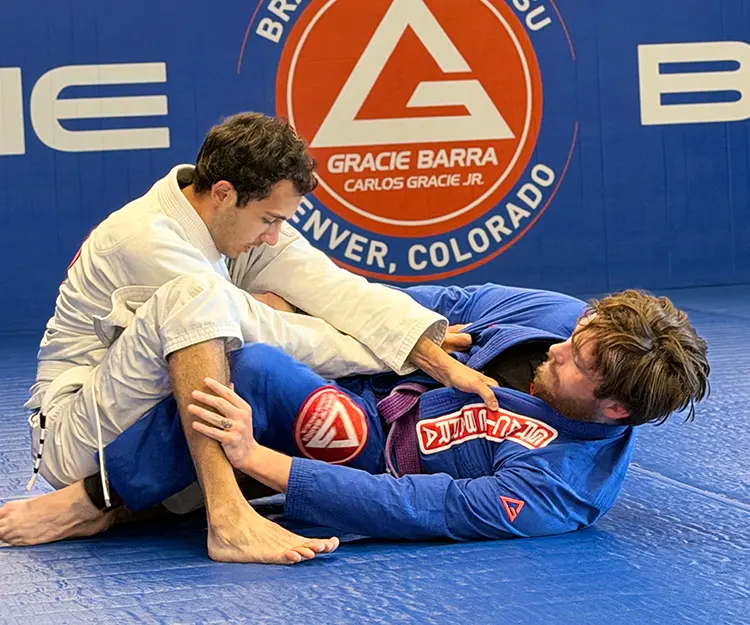
Brazilian Jiu-Jitsu (BJJ) is a martial art built around leverage, timing, and body position instead of size and power. Training happens on the ground, where a smaller person can control and neutralize a larger one using technique.
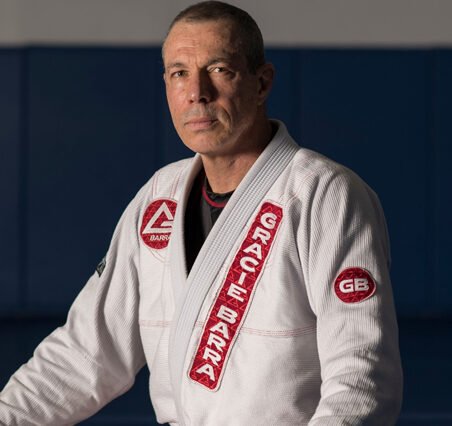
It was developed by the Gracie family in Brazil and refined into a system that regular people — not just athletes — can learn step by step. Grand Master Carlos Gracie Jr. built Gracie Barra around that idea: Jiu-Jitsu for Everyone.
Two things surprise most beginners:
- There is no striking. No punching, no kicking. You are learning control, not combat.
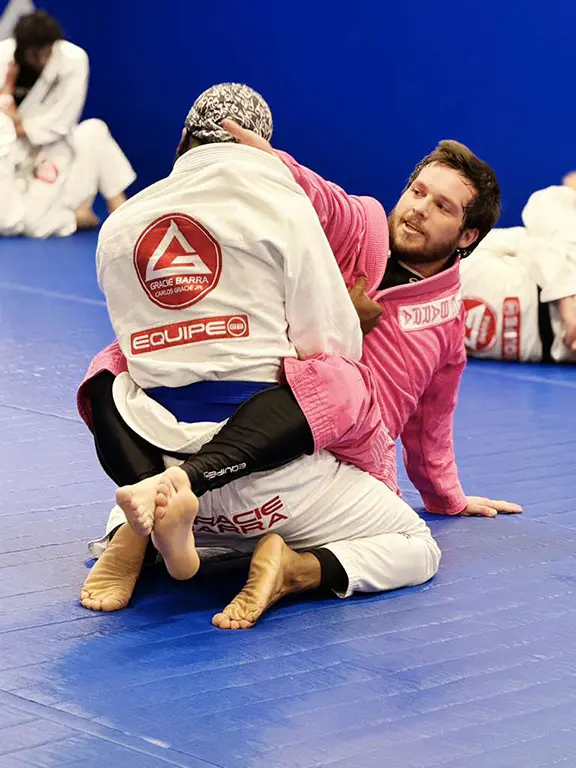
- You practice with a partner, not against one. Your training partner is helping you get better, and you are doing the same for them.
If you want the full breakdown before you start, read our guide on what Brazilian Jiu-Jitsu is. And no — Jiu-Jitsu and MMA are not the same thing.
How Jiu-Jitsu Changes Your Body
Jiu-Jitsu is a full-body workout that never feels like a workout. You are too busy solving a problem to notice you have been moving hard for an hour.
It builds cardio you can actually use
A single Jiu-Jitsu round pushes your heart rate up, brings it down, then pushes it up again. That interval pattern trains your heart and lungs to recover faster.
The difference from a machine at the gym is simple: your effort is unpredictable. You cannot set the pace and coast. Your body has to adapt in real time, which is exactly the kind of conditioning that carries over to hiking, skiing, and chasing your kids around the yard.
It builds functional strength
Jiu-Jitsu strength is grip, hips, and core. You develop it by using it — bridging, framing, escaping, sweeping — not by isolating one muscle at a time.
Most students notice the same things in the first two or three months:
- A grip that does not give out
- A core that holds position instead of collapsing
- Hips that can move under load
- Shoulders and back that feel more stable, not more beat up
It changes your body composition
Jiu-Jitsu burns a serious number of calories per session, but that is only part of it. The bigger change is that you keep showing up. A class with people expecting you is far easier to stick with than a solo gym routine.
Consistency, not intensity, is what changes your body over a year. Jiu-Jitsu is one of the few forms of training that people actually stay consistent with — because it is interesting.
It improves mobility, balance, and coordination
You will move in ways you have not moved since you were a kid: rolling, inverting, shrimping, getting up off the floor without using your hands.
That matters more as you get older. Balance and the ability to fall safely are two of the most practical physical skills an adult can own, and Jiu-Jitsu trains both every single class.
How Jiu-Jitsu Changes Your Mind
This is the part that keeps people on the mats for ten years.
You learn to stay calm under pressure
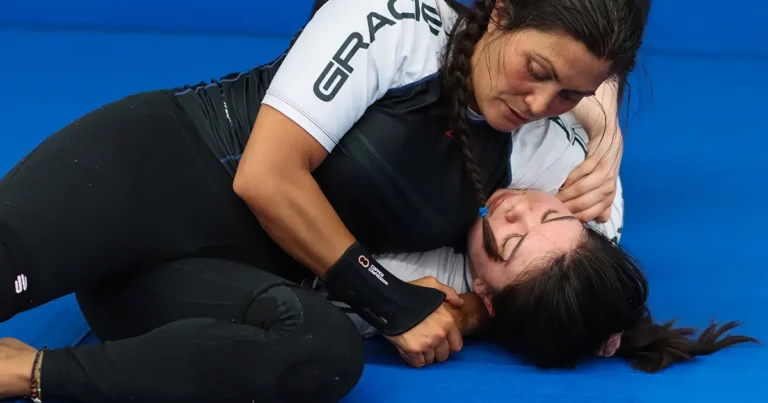
In Jiu-Jitsu, someone is on top of you and you have to think clearly anyway. There is no faking it. Either you breathe and solve the problem, or you panic and lose the position.
After a few months of that, a hard conversation at work does not feel the same. You have practiced being uncomfortable and staying functional. That skill transfers directly.
Your focus gets sharper
You cannot check your phone in the middle of a round. You cannot think about your inbox. Jiu-Jitsu demands total attention, which makes it one of the most effective forms of active mindfulness available.
Many students describe class as the only hour of their day when their brain is completely quiet.
Stress goes down
Physical effort burns off stress hormones. Focus interrupts the loop of overthinking. Community gives you people to talk to. Jiu-Jitsu delivers all three in the same hour.
You will not always feel like going to class. You will almost never regret it after.
Your confidence becomes real
There is a difference between confidence you talk yourself into and confidence you earned. Jiu-Jitsu gives you the second kind.
You know what you can do because you have done it, with someone resisting, in front of witnesses. That quiet certainty shows up in how you walk into a room, how you handle conflict, and how you carry yourself in a parking garage at night.
You get better at solving problems
Every round is a puzzle with a person attached to it. You test an idea, it fails, you adjust. Then you test again.
Over time you stop being afraid of problems you cannot immediately solve. You just start working. That habit is worth more outside the academy than inside it.
You build resilience
You will get tapped. A lot. Especially in your first year.
Jiu-Jitsu teaches you to lose small, often, and without drama — then come back tomorrow and try again. That is the single most useful mental habit anyone can develop, and almost nothing else in adult life teaches it as directly.
How Jiu-Jitsu Changes Your Social Life
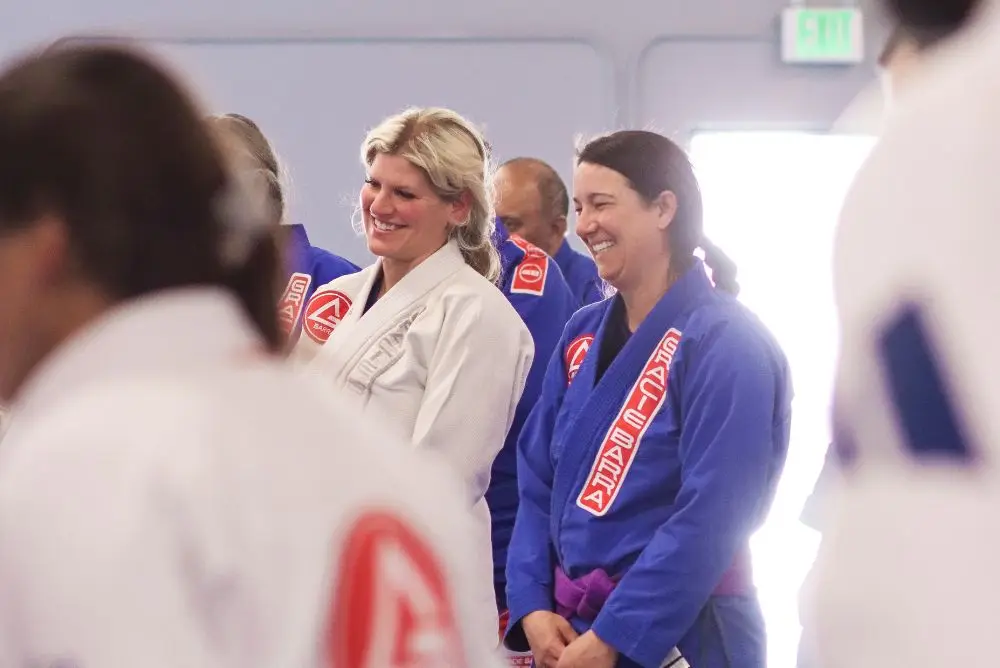
Adults are not supposed to make new close friends easily. Jiu-Jitsu ignores that rule.
- Shared difficulty builds fast trust. You struggle next to the same people three times a week. That creates a bond quickly.
- Respect is built into the culture. You bow, you shake hands, you look after your partner’s safety. It becomes automatic.
- Everyone is a beginner at something. The purple belt struggling with a new technique is in the same boat you are.
- Nobody cares what you do for work. On the mats you are just a training partner. It is one of the last genuinely level rooms most adults ever walk into.
- It can be a family activity. Plenty of parents start after enrolling their child in Jiu-Jitsu for kids and teens and end up training themselves.
Why Jiu-Jitsu Fits Denver So Well
Denver sits at 5,280 feet, and that changes the math on training in ways that work in your favor.
Training at altitude is harder — and that is a feature. Less oxygen per breath means your conditioning is challenged from day one. Denver students who travel to sea-level tournaments and camps regularly notice how much easier the air feels down there.
Two practical notes for Mile High training:
- Hydrate more than you think you need. Colorado’s dry air pulls water out of you fast, on and off the mats.
- Give yourself a few weeks. If you just moved here, expect to gas out sooner than expected at first. It passes.
It solves the Denver winter problem. Trails ice over, daylight disappears at 4:30, and outdoor routines fall apart in November. A Jiu-Jitsu academy is 75 degrees and open all winter. Your training does not have a season.
It complements everything else Denver people already do. Skiing, climbing, cycling, and trail running all reward core strength, hip mobility, balance, and the ability to fall without getting hurt. Jiu-Jitsu builds all four.
We are easy to reach from the north side of the city. Gracie Barra Denver sits on Washington Street, minutes from Globeville, Elyria-Swansea, Sunnyside, Cole, Clayton, and Five Points, with quick access from RiNo, Berkeley, Highland, Thornton, Northglenn, Commerce City, and the rest of Adams County. If you work downtown, you can be on the mats without fighting your way across town.
What Your First Class at Gracie Barra Denver Looks Like
Nervous about walking in? Here is exactly what happens.
- You arrive about 15 minutes early. Someone at the front desk greets you, shows you around, and answers your questions.
- You borrow a uniform. You do not need to buy anything to try a class. Wear shorts and a t-shirt underneath, and leave the jewelry at home.
- You warm up with the group. Light movement, nothing dramatic.
- You learn one or two techniques. The instructor breaks each one into steps and demonstrates slowly.
- You drill with a partner. They will be a more experienced student who has been assigned to look after you. Their job is to make sure you have a good first class.
- You watch or take part in live training. Beginners are never thrown into hard rounds on day one. That is not how it works here.
- You go home tired and, usually, smiling.
Every class follows the Gracie Barra method — a structured, step-by-step curriculum used across more than 1,300 schools worldwide. You are not getting a random class. You are getting week one of a system, taught by instructors certified through the Gracie Barra Instructor Certification Program. You can meet our instructors before you come in.
“But What About…” — The Real Objections
“I’m not in shape yet.” Nobody is, on day one. You do not get in shape and then start Jiu-Jitsu. You start Jiu-Jitsu and get in shape. You control your own pace, and you can tap out of any round at any time for any reason.
“I’m too old.” Our adult Jiu-Jitsu classes in Denver include students in their 30s, 40s, 50s and beyond. Technique-based training is exactly what favors older students — you win with position, not with speed.
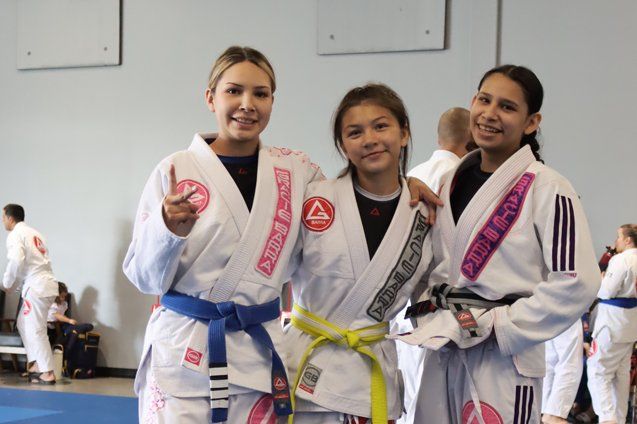
“I’m a woman and I don’t want to be the only one.” You will not be. We run women’s Jiu-Jitsu classes and our general classes include women at every belt level.
“I don’t want to get hurt.” Jiu-Jitsu has no striking, and every submission has a built-in stop signal: the tap. You control when a round ends. Our instructors match beginners with partners who train safely.
“I don’t have time.” Two classes a week is enough to make real progress. Check the class schedule — we run morning, midday, and evening classes so you can build training around your job, not the other way around.
“What if I don’t like it?” Then you tried something new for free and you know. Our first class costs nothing and there is no obligation attached to it.
How to Start This Week
- Pick a class time that fits your week on the class schedule.
- Book your free trial class at keepnexo.com.br/booking.
- Show up 15 minutes early with shorts, a t-shirt, and a water bottle.
- If you like it, look at membership options — no long-term contract required.
Interested in training without the uniform? Ask us about No-Gi training too.
Key Takeaways
- Brazilian Jiu-Jitsu uses leverage and technique, not size or strength, which is why it works for regular people.
- It improves cardio, functional strength, mobility, and body composition — without feeling like a workout.
- It builds focus, stress control, earned confidence, and resilience through repeated, low-stakes failure.
- It creates one of the fastest and most durable adult social circles you will find.
- Denver’s altitude makes training harder, and Denver’s winters make an indoor, year-round routine genuinely valuable.
- Your first class at Gracie Barra Denver is free, no experience is needed, and a uniform is provided.
Frequently Asked Questions
Do I need to be fit before I start Jiu-Jitsu? No. Jiu-Jitsu is how you get fit. Beginners train at their own pace, and you can stop a round at any time. Most students notice better conditioning within the first month or two.
How many times a week should a beginner train? Two classes a week is enough to progress steadily and build the habit. Three or more accelerates your learning, but consistency over months matters far more than volume in any single week.
Is Jiu-Jitsu safe? Jiu-Jitsu involves no striking, which removes the main injury risk found in other martial arts. Every submission includes a stop signal — the tap — and you decide when a round ends. Beginners are paired with experienced partners who train with control.
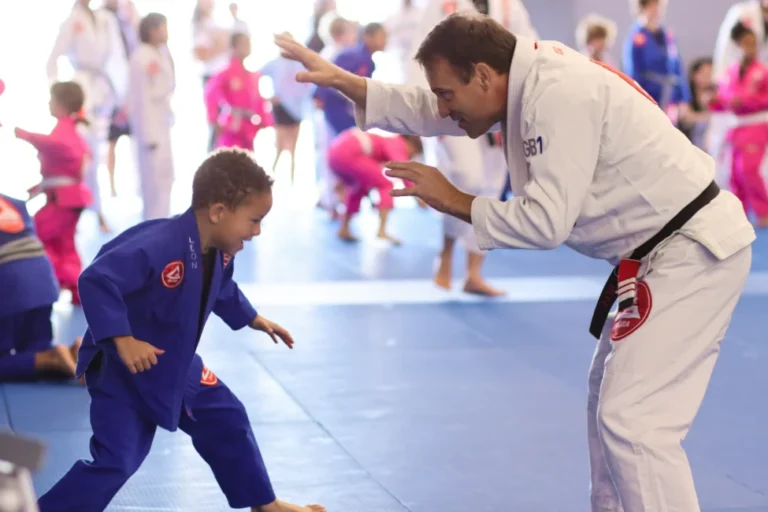
What is the right age to start Jiu-Jitsu? There is no upper limit. Kids can start around age 4 in our youth program, and adults regularly begin in their 30s, 40s, 50s and later. Because Jiu-Jitsu rewards technique over athleticism, it stays practical for a lifetime.
What should I wear to my first class? Wear athletic shorts and a t-shirt, and bring a water bottle. Gracie Barra Denver provides a uniform for your trial class, so you do not need to buy a gi before you decide.
How long does it take to get a blue belt in Jiu-Jitsu? For most adults training consistently, the first belt promotion takes roughly one to two years. Timelines vary by training frequency, attendance, and individual progress — belts in Jiu-Jitsu are earned on the mats, not on a schedule.
Does training at Denver’s altitude make Jiu-Jitsu harder? Yes, at first. At 5,280 feet there is less oxygen per breath, so newcomers to Colorado often tire faster in their first weeks. Your body adapts, and the payoff is stronger conditioning than you would build at sea level.
Is Brazilian Jiu-Jitsu good for self-defense? Yes. Jiu-Jitsu focuses on controlling an opponent and neutralizing a threat from close range and from the ground, where many real confrontations end up. It teaches control, distance management, and how to stay calm under physical pressure.
Train With Us in Denver
Gracie Barra Denver teaches Brazilian Jiu-Jitsu and self-defense to adults, teens, kids, and women — beginners very much included.