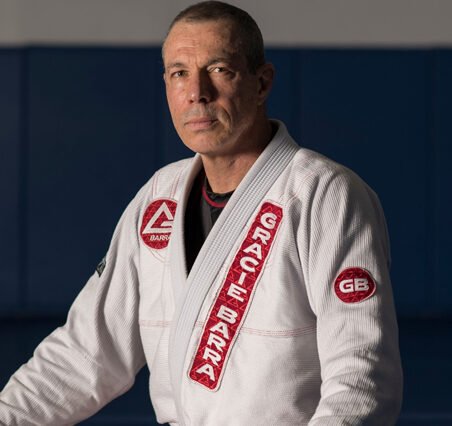
Hi, I’m Professor Valerio Ubaldini, head professor at Gracie Barra Denver.
I want to start with the objection, because it’s the one I hear most often from women standing at our front desk:
“I’m not strong enough for this.”
I understand where it comes from. Brazilian Jiu-Jitsu looks physical. It is physical. But the assumption underneath that sentence is backwards, and I’d like to explain why.
Brazilian Jiu-Jitsu was specifically designed by a man who was not strong. Hélio Gracie was small and physically frail, and he rebuilt the techniques he’d learned around one question: how does a smaller person control a bigger one? Everything in the system — leverage, angles, position, timing — exists because brute strength was never available as an answer.
That’s not marketing. It’s the actual design constraint the art was built under. Which is exactly why it works so well for women.
What Makes BJJ Different From Other Martial Arts for Women
It solves the problem that actually happens
Most self-defense instruction focuses on striking. Striking is useful, but it rewards reach, mass, and power — three things that tend not to favor a smaller person against a larger one.
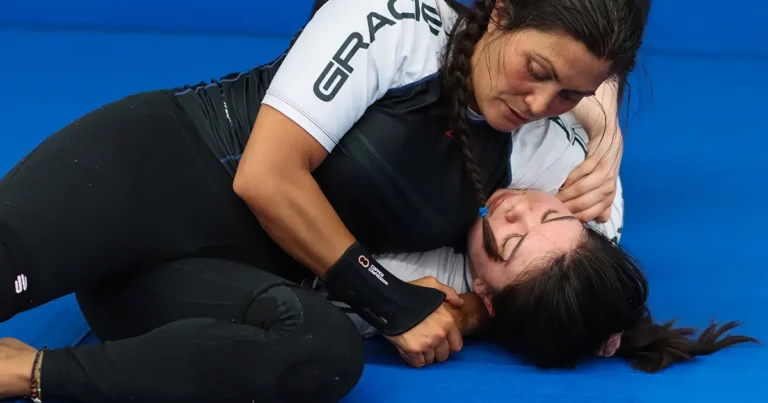
The situations women most often describe are different. They’re close-range. Someone has grabbed you, pinned you, or taken you to the ground. That’s a control problem, not a striking problem.
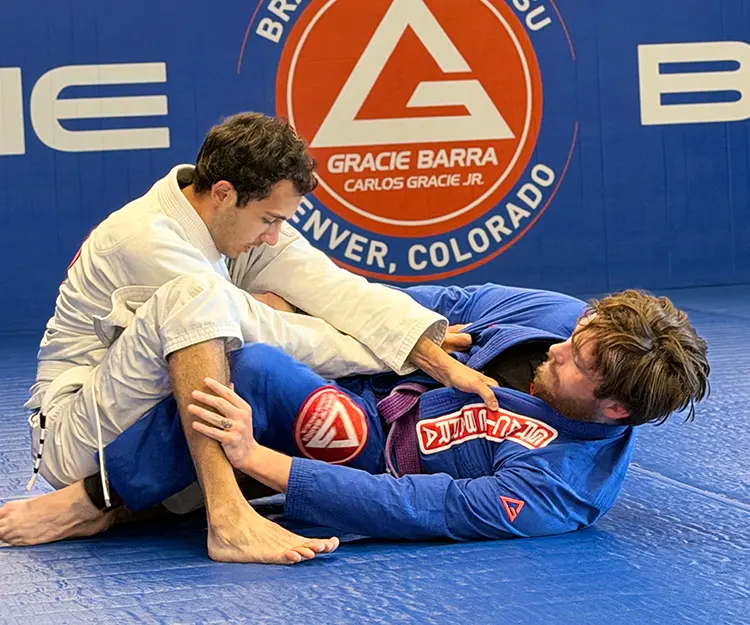
Brazilian Jiu-Jitsu trains that exact scenario more than any other martial art. How to create space when someone is on top of you. How to get back to your feet. How to break a grip that’s stronger than your grip. These are the core skills of the sport, not a special seminar once a year.
You train against full resistance, safely
This is the part that separates BJJ from most self-defense courses, and it matters enormously.
In a weekend self-defense workshop, you practice techniques on a cooperative partner. That’s fine for learning the shape of a movement, but you never find out if it works when someone genuinely doesn’t want you to do it.
In Jiu-Jitsu, you practice against people actively resisting, at full effort, several times a week — and nobody gets hurt, because tapping ends the round instantly. That means you’re not hoping a technique works. You’ve tested it hundreds of times against people who were trying to stop you.
Confidence built that way is very hard to shake.
Size stops being the whole story
There’s a moment I watch for with every new student. Usually somewhere in the first few months, a woman who weighs 130 pounds sweeps a 200-pound training partner — not with strength, but because she set the angle correctly and he was slightly off balance.
The look on her face is always the same. Something recalibrates.
That’s not a confidence exercise. It’s evidence. She now knows something about physics and leverage that she didn’t know an hour earlier, and it’s hers permanently.
The Benefits That Have Nothing to Do With Fighting
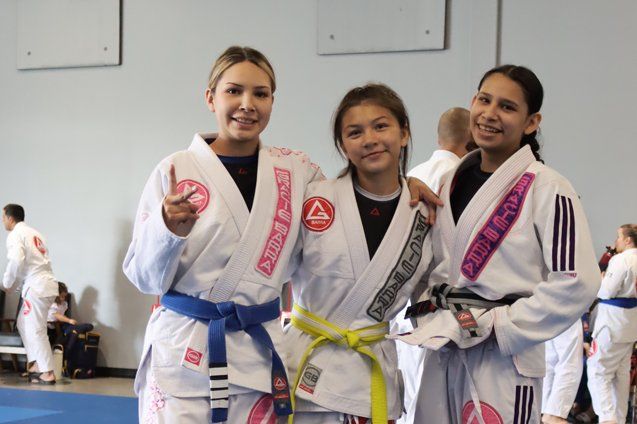
Most of our women students didn’t come in for self-defense. They came for one of these and stayed for all of them.
Fitness that doesn’t feel like the gym. An hour of Jiu-Jitsu is a full-body workout — grip, core, hips, cardio — but you’re solving a problem, not counting reps. People who’ve never stuck with a fitness routine stick with this one, because it’s interesting.
Stress that goes somewhere. You cannot think about your inbox while someone is passing your guard. Training demands complete attention, and that’s genuinely restorative in a way that few things are.
Problem-solving under pressure. Jiu-Jitsu is often called physical chess, and the comparison holds. You’re constantly reading a situation, choosing a response, and adjusting when it fails. That skill doesn’t stay on the mat.
A community that’s hard to find as an adult. Making real friends after 25 is difficult. Training with the same people several times a week, at close quarters, with mutual trust — that builds friendships fast.
Boundaries you can feel. Several of our students have described the same thing: they became more comfortable saying no, taking up space, being direct. Something about regularly practicing the physical version of “no” changes the verbal one.
The Honest Answers to What Women Actually Worry About
Let me address the real hesitations rather than pretend they don’t exist.
“I’ll be the only woman there”
Possibly, in some classes. Our women’s numbers have grown steadily [confirm: número atual de alunas / percentual da turma adulta], but Jiu-Jitsu is still male-majority overall, and I’m not going to pretend otherwise.
Two things help. First, a well-run academy makes this a non-issue through culture — upper belts are expected to train appropriately with everyone, and I address it directly rather than hoping it sorts itself out. Second, we run [confirm: women’s classes / women’s schedule], which gives you a room where that question doesn’t come up at all.
“It’s too close-contact for me”
This is a fair concern, and I’d rather you raise it than quietly not come back.
Jiu-Jitsu involves close physical contact. There’s no version of it that doesn’t. What makes it work is that it’s structured, purposeful contact with clear rules — the same way physical therapy or partner dancing is. Nobody freelances.
You choose your training partners. You can decline any round for any reason, with no explanation needed. If something feels wrong, you say so, and it gets handled. That’s not a courtesy at our academy — it’s the standard I hold the room to.
“I’m not fit enough to start”
Nobody is fit for Jiu-Jitsu before they do Jiu-Jitsu. It’s a specific kind of conditioning that only training builds.
Every class is scalable. You sit out a round when you need to. In four to six weeks, the thing that wrecked you in week one is manageable. This is normal and universal — the black belts in the room went through exactly the same thing.
“I’m too old to start”
Our adult mat runs [confirm: faixa etária das alunas]. Because BJJ relies on leverage rather than explosive power, it’s genuinely accessible later in life in a way that high-impact martial arts aren’t.
“I don’t want to compete”
Then don’t. The overwhelming majority of our students never compete and never will. Competition is available if you want it, and completely optional if you don’t.
What Your First Month Actually Looks Like
Week one. You learn how to move — shrimping, bridging, standing up safely. You’ll be sore in strange places and you will feel lost. Everyone does.
Weeks two and three. You start recognizing positions. You learn your first escapes, which is the most useful thing a beginner can own. Cardio starts improving.
Week four. Something clicks — usually a small thing. You escape a position that used to be hopeless, or you finally breathe normally during a round. This is where most people decide they’re staying.
If you want the longer version, we wrote a full piece on what nobody tells you about being a white belt.
Jiu-Jitsu Classes for Women in Denver
At Gracie Barra Denver we teach the Gracie Barra curriculum — a structured method refined by Grand Master Carlos Gracie Jr. over more than forty years, taught the same way across 1,300+ schools worldwide.
For a new student, that structure matters more than it sounds. It means:
- Beginners train in a dedicated fundamentals class, not thrown into an advanced room.
- Self-defense concepts are built into the curriculum from the start, not added as an extra.
- You always know what you’re working on and why.
- The standard of behavior on the mat is set by the school, not left to chance.
We serve Denver and the surrounding Colorado communities from [Studio Address].
Your First Class Is Free
Come and see the room before you decide anything. No obligation, no sales pressure, no pretending you’re interested if you’re not.
Wear athletic clothes with no zippers or pockets, bring water, arrive ten minutes early. We’ll lend you a gi and I’ll walk you through how a class runs.
[Book your free class here]([Booking Link]) or call us at [Phone].
— Prof. Valerio Ubaldini, Gracie Barra Denver
Frequently Asked Questions
Is Brazilian Jiu-Jitsu good for women’s self-defense?
Yes, and it’s arguably the most directly applicable martial art for it. BJJ specializes in close-range and ground situations where a smaller person needs to control or escape a larger one — and it trains those scenarios against fully resisting partners, so you learn what actually works.
Do I need to be strong or athletic to start Jiu-Jitsu?
No. The system was built around leverage precisely because its creator wasn’t strong. Strength helps at the very beginning and matters less and less as your technique improves. Most women arrive with no athletic background.
What should I wear to my first Jiu-Jitsu class?
Athletic clothing without zippers, buttons, or pockets — leggings and a fitted t-shirt or rash guard work well. Bring water and trim your nails. Most academies, including ours, lend you a gi for the trial class.
Are there women-only Jiu-Jitsu classes in Denver?
We offer [confirm: women’s class schedule] at Gracie Barra Denver. Many women train in the mixed classes as well — both options are available, and you’re never obligated to choose one over the other.
How long does it take to feel capable in Jiu-Jitsu?
Most students feel meaningfully more capable within three to six months of consistent training — meaning two or three classes a week. You’ll notice specific improvements much sooner: better escapes, calmer breathing, and better conditioning inside the first month.
Is Jiu-Jitsu safe for women training with larger men?
At a properly run academy, yes. Training partners are matched thoughtfully, live rounds are supervised, and tapping ends a round immediately with no consequence. Training with larger partners is also how you learn the leverage that makes the art work — but it should always happen with control.