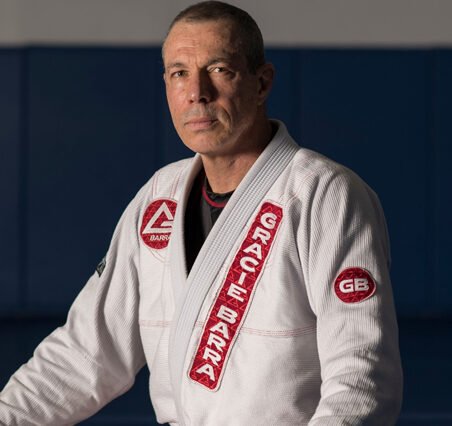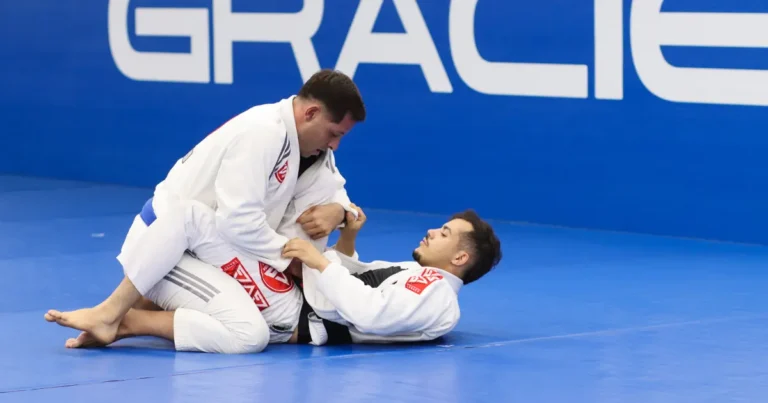
Hi, I’m Professor Valerio Ubaldini, head professor at Gracie Barra Denver.
This question comes up almost every week, usually from someone standing at the front desk deciding what to do with their Tuesday nights. Judo or Jiu-Jitsu? They look similar. What’s the difference?
They do look similar, and that’s not an accident — they come from the same family. But once you’re on the mat, they feel like completely different sports. Let me explain where they split, and then be honest with you about which one fits which kind of person.
I’ll say up front that I have deep respect for Judo. Brazilian Jiu-Jitsu literally would not exist without it.
Same Roots, Different Branches
Judo was created in Japan by Jigoro Kano in the late 1800s. He took the older Japanese jiu-jitsu systems, stripped out the techniques that were too dangerous to practice at full speed, and built a method you could train hard against a resisting partner without destroying each other. That single decision — safe, full-resistance training — is why Judo spread across the world and eventually became an Olympic sport.
Brazilian Jiu-Jitsu came out of that same lineage. Mitsuyo Maeda, one of Kano’s students, traveled to Brazil in the early 1900s and taught what he knew to the Gracie family. Carlos and Hélio Gracie took those techniques and pushed them in a specific direction: what happens when the fight doesn’t end after the throw?
Hélio in particular was small and not physically strong. He needed a system where leverage and position beat size. So the family spent decades refining the ground portion — how to control a bigger person, how to survive underneath, how to finish from positions where strength doesn’t help much.
That’s the split in one sentence: Judo perfected getting the fight to the ground. Brazilian Jiu-Jitsu perfected what happens once it’s there.
If you want the fuller story of how that lineage reached our mats, we wrote about the history of Gracie Barra separately.
How the Two Sports Actually Feel to Train
Origins are interesting. What matters more is what you’ll do on a Tuesday night.
In a Judo class
Most of your training centers on standing grip fighting and throws. You spend a lot of time on breaking balance, footwork, and entries. You will be thrown, and you’ll spend real time learning to fall properly before anything else.
Groundwork exists in Judo — it’s called ne-waza — but the rules limit how long you can stay there. If nothing is progressing on the ground, the referee stands you back up. So training reflects that: the ground is a place to finish quickly, not to live.
In a Brazilian Jiu-Jitsu class
Most of your training happens on the ground. Guard, sweeps, passing, escapes, submissions. Rounds are long — typically five to six minutes — and there’s no referee standing you up because you’ve been working for ninety seconds.
Takedowns are absolutely part of BJJ, and good schools teach them. But the bulk of your mat hours goes into positional control and submission chains.
The physical difference
This is the part people underestimate.
Judo is high-impact. Being thrown is a controlled event, but it’s still an impact event, and it happens hundreds of times a week. Judo athletes tend to develop serious explosive power and grip strength as a result.
Brazilian Jiu-Jitsu is lower-impact but more sustained. It’s grip endurance, hip mobility, and breath control under pressure. You leave a BJJ class feeling wrung out; you leave a Judo class feeling rattled.
Neither is easier. They’re just hard in different currencies.
Which One Is Better for Self-Defense?
Both help. But they answer different questions.
Judo’s strength is the moment where a confrontation starts — someone grabs you, and you use their momentum to put them on the ground while you stay standing. That’s genuinely valuable, and Judo trains it against full resistance.
Brazilian Jiu-Jitsu’s strength is the situation most people are least prepared for: the fight is already on the ground and someone bigger is on top of you. BJJ trains that specific problem more than any other martial art. It also gives you options between doing nothing and hurting someone — you can control a person without striking them, which matters a lot more in real life than most people realize.
Honest answer: if you could only train one for self-defense, I’d point most people toward Brazilian Jiu-Jitsu, because ground control is the gap in almost everyone’s game and because the skill set scales down to non-violent outcomes. But someone who trains Judo seriously is far from defenseless, and the two combine beautifully.
We go deeper on this in our article on whether Jiu-Jitsu really works for self-defense.
Judo vs Jiu-Jitsu at a Glance
| Judo | Brazilian Jiu-Jitsu | |
|---|---|---|
| Main focus | Throws and takedowns | Ground control and submissions |
| Where the match is decided | Usually standing | Usually on the ground |
| Round length | Short exchanges, quick finishes | Long rounds, positional battles |
| Impact level | High — falling is constant | Lower — sustained pressure |
| Strength advantage | Rewards explosive power | Rewards leverage and technique |
| Learning curve | Steep early (you must learn to fall first) | Gradual (survive first, attack later) |
| Olympic sport | Yes | No (own competition circuit) |
Who Should Choose Brazilian Jiu-Jitsu?
I’d steer you toward BJJ if you recognize yourself in any of these.
You’re starting martial arts as an adult with no background. BJJ has a gentler on-ramp. Week one is movement and escapes, not being thrown across the room. You can start unfit and out of practice and be fine.
You’re not the biggest person in the room. The entire system was built by and for someone who couldn’t rely on size. Leverage genuinely works — you’ll feel it happen to you before you can do it yourself.
You have an old injury or you’re over 40. Lower impact means a longer training life. We have students who started in their forties and fifties and are still on the mats years later.
You want something you can do for decades. Judo careers, especially competitive ones, tend to be shorter because of the impact load. Plenty of people train BJJ into their sixties.
You want a martial art where you can go 100% safely. Both allow this, honestly. But in BJJ you can train at full intensity against a fully resisting partner nearly every session, and tap out with no consequence. That volume of realistic practice adds up fast.
Who Should Choose Judo?
I’d rather tell you the truth than pitch you.
Go train Judo if the standing game is what excites you, if you want a path to Olympic-style competition, if you’re young and athletic and want to build explosive power, or if there’s a great Judo coach near you and the BJJ options are thin. A great coach in the “wrong” art beats a mediocre coach in the “right” one every time.
Also — the two combine extremely well. Some of the best BJJ competitors in the world have a Judo base, and plenty of our students cross-train.
Training Brazilian Jiu-Jitsu in Denver
At Gracie Barra Denver, we teach the Gracie Barra curriculum — a structured method refined by Grand Master Carlos Gracie Jr. over more than forty years and used across 1,300+ schools worldwide.
What that means practically:
- Beginners have their own class. You learn the fundamental positions, escapes, and self-defense concepts in a proper sequence, not by getting thrown into an advanced room.
- Takedowns are part of the curriculum. We’re a Jiu-Jitsu school, but the fight starts standing, and we teach it that way.
- The progression is clear. You always know what you’re working on and why.
- The room is mixed. Adults in their twenties through their fifties, athletes and complete beginners, [confirm: número de alunos ativos / anos de operação].
We serve Denver and the surrounding Colorado communities from [Studio Address].
Come Try a Class — It’s Free
You’ll learn more in one hour on the mat than in a week of reading comparisons like this one. Your first Brazilian Jiu-Jitsu class at Gracie Barra Denver is free, with no obligation.
Wear shorts and a t-shirt with no zippers or pockets, arrive ten minutes early, and we’ll take care of the rest. [Book your free class here]([Booking Link]) or call [Phone].
— Prof. Valerio Ubaldini, Gracie Barra Denver
Frequently Asked Questions
Is Judo or Jiu-Jitsu harder to learn?
Judo is usually harder in the first few months because you have to learn to fall safely before you can train properly. Brazilian Jiu-Jitsu has a gentler start but a long middle — the ground game has an enormous amount of detail. Neither is easy; they front-load the difficulty differently.
Can you train Judo and Brazilian Jiu-Jitsu at the same time?
Yes, and many people do. The skills complement each other well — Judo sharpens your standing game and grip fighting, BJJ deepens your ground game. Just watch your total training volume so your body can recover.
Is Brazilian Jiu-Jitsu just Judo groundwork?
No. BJJ started from Judo’s ground techniques, but a century of development in a different rule set produced positions, guards, and submission systems that don’t exist in Judo. The two have grown well apart.
Which is better for a child, Judo or Jiu-Jitsu?
Both build discipline and coordination. Parents often prefer Jiu-Jitsu for younger children because it’s lower impact and the anti-bullying application is direct — a child can control a situation without striking anyone.
Do you learn takedowns in Brazilian Jiu-Jitsu?
Yes. Takedowns are part of the Gracie Barra curriculum. The emphasis is different from Judo — fewer throw variations, more focus on entries that set up your ground game — but you will learn to take a fight to the ground.
Which one is better for losing weight?
Both are excellent conditioning. Brazilian Jiu-Jitsu tends to be easier to do frequently because it’s lower impact, and training frequency is what actually drives results. Most of our students notice fitness changes within the first two months.