Quick answer: Gracie Barra was founded in 1986 by Carlos Gracie Jr. in the Barra da Tijuca neighborhood of Rio de Janeiro, Brazil. It grew from one small academy into more than 1,300 schools worldwide, built on a single idea: Jiu-Jitsu for Everyone. Gracie Barra Denver is part of that team, and its instruction traces directly back to the founders of the art.
When you walk into a Brazilian Jiu-Jitsu school, you are not just signing up for classes. You are stepping into a line of teachers that goes back more than a century.
That line matters more than most people realize. It is the difference between a gym that teaches moves and a school that teaches a system — one that has been tested, refined, and passed down deliberately from one generation to the next.
Here is where Gracie Barra came from, and how that history ended up on the mats in Denver.
Gracie Barra Timeline at a Glance
| Year | What happened |
|---|---|
| 1914 | Japanese judoka Mitsuyo Maeda arrives in Brazil |
| 1925 | The Gracie family opens its first Jiu-Jitsu academy in Rio de Janeiro |
| 1956 | Carlos Gracie Jr. is born in Rio de Janeiro |
| 1977 | Hélio Gracie promotes Carlos Gracie Jr. to black belt |
| 1982 | Rolls Gracie dies; Carlos Jr. takes over leadership of the Copacabana academy |
| 1986 | Carlos Gracie Jr. founds the first Gracie Barra school in Barra da Tijuca |
| 1993 | Royce Gracie wins the first UFC, and the world notices Jiu-Jitsu |
| 1994 | Carlos Gracie Jr. founds the CBJJ, and later the IBJJF |
| 2005 | Gracie Barra opens its U.S. headquarters in Irvine, California |
| Today | More than 1,300 Gracie Barra schools across six continents |
Where It Started: Japan to Brazil
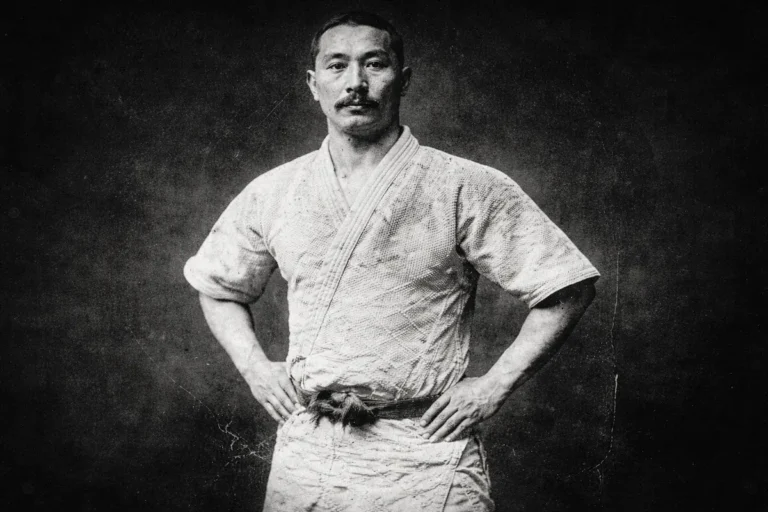
The story begins with Mitsuyo Maeda, a Japanese judoka who traveled the world taking on challengers to prove the effectiveness of his art. In 1914 he arrived in Brazil.
There, Maeda’s knowledge reached the Gracie family. Carlos Gracie Sr. took to it immediately and passed what he learned to his brothers.
In 1925 the family opened its first academy in Rio de Janeiro. That school became the laboratory where Japanese jiu-jitsu was pulled apart and rebuilt into something new.
How the Gracie Family Changed the Art
The most important change came from Hélio Gracie, Carlos Sr.’s younger brother. Hélio was small and physically frail, and many of the techniques simply did not work for him against bigger training partners.
So he changed them.
Hélio systematically reworked the art around leverage, timing, and positioning instead of strength and speed. The result was a version of Jiu-Jitsu that a smaller person could genuinely use against a larger one — the core principle that still defines the art today.
That single decision is why Brazilian Jiu-Jitsu became a martial art for ordinary people rather than only for athletes. If you want the technical picture of how it works, read our guide on what Brazilian Jiu-Jitsu is.
Who Is Carlos Gracie Jr.?
Carlos Gracie Jr., known to everyone as Carlinhos, was born in Rio de Janeiro on January 17, 1956. He is the son of Carlos Gracie Sr.
He grew up inside the art, learning from three of its most influential figures: his father, his uncle Hélio Gracie, and his older brother Rolls Gracie — widely considered one of the most creative minds Jiu-Jitsu has produced. Hélio promoted him to black belt in 1977.
When Rolls died in 1982, Carlos Jr. stepped into the leadership of the family’s Copacabana academy. He carried that responsibility for several years before deciding to build something of his own.
1986: The First Gracie Barra School
In 1986, Carlos Gracie Jr. opened his own academy in Barra da Tijuca, a neighborhood on the western side of Rio de Janeiro.
The name came from the students themselves. People began calling the group the Gracies from Barra — and the name stuck. Gracie Barra.
The first classes had roughly twenty students. Within a year that number had grown to around two hundred, and the school moved into a larger space to keep up.
What set it apart was not just the technical level. It was the atmosphere. At a time when many Jiu-Jitsu academies were built around a small circle of tough competitors, Carlos Jr. was building something deliberately open.
The Idea That Changed Everything: “Jiu-Jitsu for Everyone”
This is the part of the history that actually affects your first class.
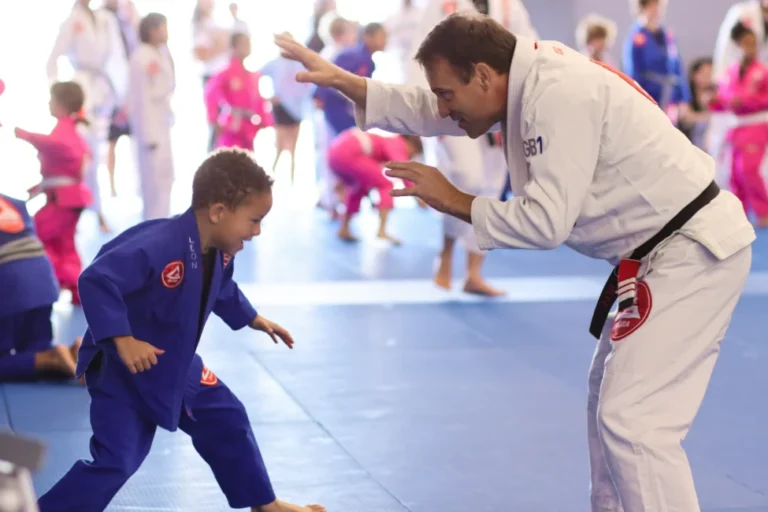
Carlos Gracie Jr. believed Jiu-Jitsu should not belong only to fighters. He wanted a school where a doctor, a mother of three, a nervous teenager, and a world champion could all train in the same room, safely, and all get what they came for.
That philosophy — Jiu-Jitsu for Everyone — became the foundation of the entire organization. It shows up in concrete ways:
- A structured curriculum, so beginners are not thrown into whatever the instructor felt like teaching that day
- Separated program levels, so a first-week student is not training the same material as a competitor
- A safety-first culture, where the experienced students are responsible for looking after the new ones
- Formal etiquette and hierarchy, which sounds strict but exists mainly to protect people on the mats
The Red Shield became the symbol of that mission — a global community built around brotherhood, integrity, and personal development.
How Gracie Barra Went Global
Three things turned a single academy in Rio into a worldwide organization.
1. Jiu-Jitsu proved itself in public (1993)
When Royce Gracie won the first Ultimate Fighting Championship in 1993 against much larger opponents, the world got a live demonstration of what leverage-based Jiu-Jitsu could do. Interest exploded, and demand for qualified instruction followed.
2. Carlos Jr. built the sport’s institutions
He was not only running a school. He founded the Brazilian Jiu-Jitsu Confederation (CBJJ) in 1994 and went on to found and lead the IBJJF — the sport’s most recognized governing body, responsible for the World Championship and the standardized rules and belt system used globally.
He also created the publication that became Gracie Magazine, which gave the sport its first real media voice.
Very few martial arts organizations can say their founder also built the sport’s federation. That is a large part of why Gracie Barra rank carries the weight it does.
3. He exported instructors, not just a brand
Carlos Jr. sent trained Gracie Barra black belts abroad to open schools and build careers. In 2005 he founded the Gracie Barra U.S. headquarters in Irvine, California.
Today Gracie Barra has more than 1,300 schools across six continents, along with a professional development arm — the Gracie Barra Institute — dedicated to training its instructors.
What Makes a School an Actual Gracie Barra School
This is worth understanding before you choose any academy, because “affiliated” means very different things at different martial arts brands.
A Gracie Barra school operates under a defined system:
- The GB Method — a structured, progressive curriculum used across every school in the network
- Program levels — GBK for kids, GB1 (Fundamentals), GB2 (Advanced), and GB3, so you always train material matched to your level
- The ICP — the Gracie Barra Instructor Certification Program, which trains instructors in how to teach, not just what they know
- GB CompNet — a competition network for students who want to test themselves, with participation always optional
- Shared standards — uniform, etiquette, and mat culture that stay consistent from Rio to Denver
The practical benefit: if you start training in Denver and move to another city, you can walk into a Gracie Barra school there and pick up exactly where you left off.
The Athletes That Came Out of It
Gracie Barra’s competitive record is one of the strongest in the sport. Athletes developed within the organization include Roger Gracie, widely regarded as one of the greatest of all time; Kyra Gracie, the first woman in the Gracie family to earn a black belt, promoted by Carlos Gracie Jr. in 2005; and champions such as Braulio Estima, Romulo Barral, Marcio Feitosa, Vinicius “Draculino” Magalhães, Otávio Sousa, and Felipe Pena.
You do not need to compete to benefit from this. It simply means the curriculum you are learning has been pressure-tested at the highest level of the sport.
How That History Reaches Denver
Here is the part that matters if you live in Colorado.
Lineage in Jiu-Jitsu is traceable, teacher to teacher, like a family tree. The line running through Gracie Barra Denver goes:
Mitsuyo Maeda → Carlos Gracie Sr. and Hélio Gracie → Carlos Gracie Jr. → Prof. Jefferson Moura → Head Prof. Valerio Ubaldini
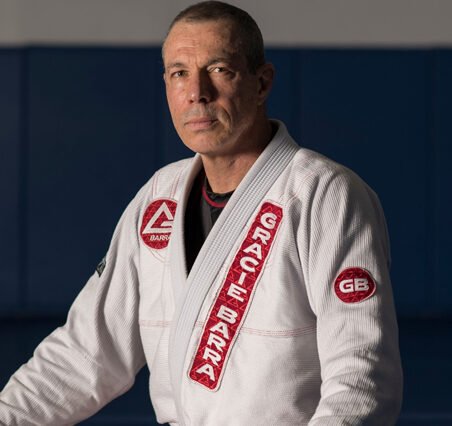
Instruction at Gracie Barra Denver is led by Head Professor Valerio Ubaldini. His mentor, Professor Jefferson Moura, is a 6th-degree black belt from Rio de Janeiro and a former World, Brazilian, Pan-American, and European Champion who has developed black belts and students around the world.
Every instructor on our mats is also certified through the Gracie Barra Instructor Certification Program. That means when you take a beginner class here, you are not getting a watered-down version of the art. You are getting the same structured system taught in Rio de Janeiro, Irvine, and every other Gracie Barra school — delivered by people trained to teach it clearly.
You can meet our instructors or read more about Gracie Barra Denver before you visit.
Why Any of This Should Matter to You
If you are comparing martial arts schools in Denver, history is not nostalgia. It is a practical filter:
- A traceable lineage tells you who taught your instructor, and who taught them
- A standardized curriculum tells you your progress will be structured, not improvised
- Certified instructors tell you your coach was trained to teach, not just to win
- A global network tells you your rank and progress travel with you
- A stated philosophy tells you what kind of room you are walking into
Gracie Barra’s answer to that last point has not changed since 1986. Jiu-Jitsu for Everyone means you belong here whether you are 8 or 58, athletic or completely out of shape, aiming at a world title or just trying to do something good for yourself this year.
Key Takeaways
- Gracie Barra was founded in 1986 by Carlos Gracie Jr. in Barra da Tijuca, Rio de Janeiro.
- The art itself traces to Mitsuyo Maeda’s arrival in Brazil in 1914 and the Gracie family’s first academy in 1925.
- Hélio Gracie’s rework of the techniques around leverage is what made Jiu-Jitsu practical for smaller people.
- Carlos Gracie Jr. also founded the sport’s leading governing body, the IBJJF, and the publication that became Gracie Magazine.
- Gracie Barra now runs more than 1,300 schools worldwide under one shared curriculum and instructor certification program.
- Gracie Barra Denver is led by Head Professor Valerio Ubaldini, with a lineage running back through Prof. Jefferson Moura to Carlos Gracie Jr.
Frequently Asked Questions
When was Gracie Barra founded? Gracie Barra was founded in 1986 by Carlos Gracie Jr. in the Barra da Tijuca neighborhood of Rio de Janeiro, Brazil. It began with about twenty students and grew into a global organization of more than 1,300 schools.
Who founded Gracie Barra? Carlos Gracie Jr., known as Carlinhos, founded Gracie Barra. Born in 1956, he is the son of Carlos Gracie Sr. and learned the art from his father, his uncle Hélio Gracie, and his brother Rolls Gracie. He also founded the IBJJF, the sport’s leading governing body.
Where does the name “Gracie Barra” come from? The name comes from Barra da Tijuca, the Rio de Janeiro neighborhood where the first school opened in 1986. Students began referring to the group as the Gracies from Barra, and the name became official.
What does “Jiu-Jitsu for Everyone” mean? It is Gracie Barra’s founding philosophy: Jiu-Jitsu should be accessible to everyone, not only to competitors. In practice it means a structured curriculum, separate program levels, a safety-first culture, and classes open to all ages and fitness levels.
How many Gracie Barra schools are there? There are more than 1,300 Gracie Barra schools worldwide, spread across six continents, all operating under the same curriculum, instructor certification standards, and belt system.
What is the Gracie Barra lineage of the Denver school? The lineage runs Mitsuyo Maeda → Carlos Gracie Sr. and Hélio Gracie → Carlos Gracie Jr. → Prof. Jefferson Moura → Head Prof. Valerio Ubaldini, who leads instruction at Gracie Barra Denver.
Is Gracie Barra the same as Gracie Jiu-Jitsu? They share the same family origin but are separate organizations. Gracie Barra is the team and school network founded by Carlos Gracie Jr. in 1986, with its own curriculum, instructor certification program, and worldwide structure.
Do I need to know the history to start training? No. You can book a free first class and learn as you go. The history simply explains why the classes are structured the way they are, and why the same system is taught in every Gracie Barra school.
Train Where the Lineage Lives
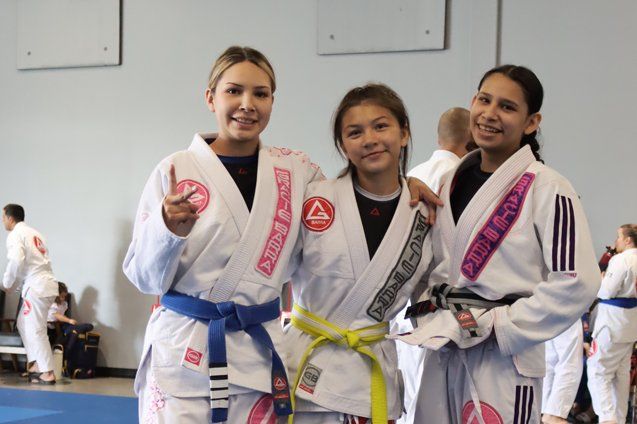
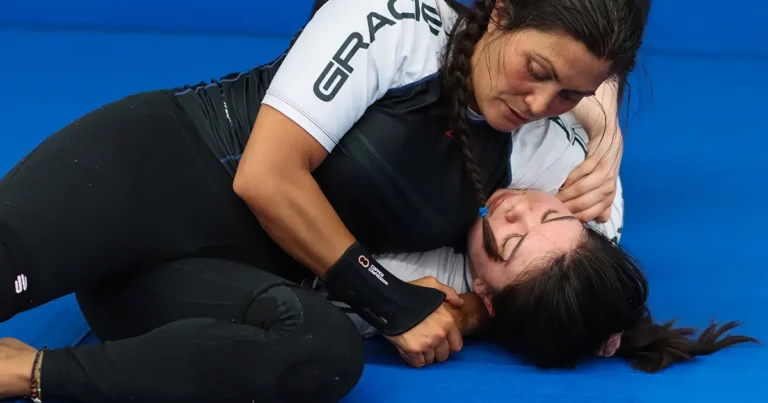
Gracie Barra Denver teaches Brazilian Jiu-Jitsu and self-defense to adults, teens, kids, and women, using the same curriculum built in Rio de Janeiro and refined across four decades.
Curious what training actually does for you? Read how Jiu-Jitsu changes your life, or look through our Jiu-Jitsu classes and class schedule.
📍 [Studio Address], Denver, CO 📞 [Phone] ✉️ [Email]
Your first class is free. Book your free trial class →