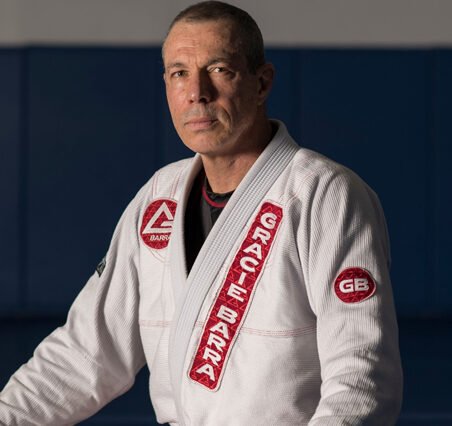
Hi, I’m Professor Valerio Ubaldini, head professor at Gracie Barra Denver.
This question deserves a straight answer, so I’m going to give you one — including the parts that don’t flatter my own sport.
Short version: Brazilian Jiu-Jitsu is one of the most effective things you can train for self-defense, for reasons that are specific and explainable. It also has real limitations that no honest instructor should hide from you.
Here’s both halves.
Why BJJ Works: Four Specific Reasons
1. It trains the situation people are least prepared for
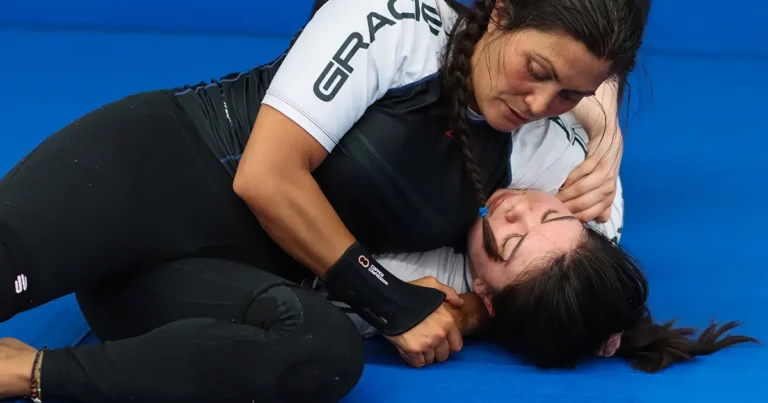
Most confrontations that turn physical end up close-range — grabbed, pushed against something, or on the ground. That’s not a stylistic opinion; it’s simply what happens when two people who don’t know how to fight end up fighting.
Almost nobody is prepared for that. People imagine a striking exchange at arm’s length, which is the situation most martial arts train. Once someone has hold of you, striking options collapse fast.
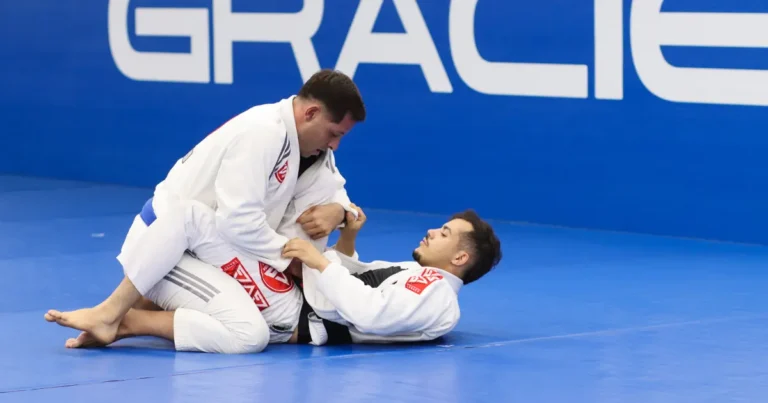
Brazilian Jiu-Jitsu spends the majority of its training hours in exactly that range. Escaping from underneath. Breaking grips. Getting back to your feet. It’s the least-covered gap in most people’s preparation, and it’s this sport’s entire specialty.
2. You train against full resistance, and that’s rare
This is the reason I’d put BJJ ahead of most self-defense instruction, and it has nothing to do with the techniques themselves.
In a typical self-defense course, you practice on a partner who cooperates. You learn the shape of a movement, but you never discover whether it survives contact with someone who genuinely doesn’t want it to work.
In Jiu-Jitsu, every session ends with live training against someone resisting at full effort. It’s safe because tapping ends the round instantly and there’s no striking. So you accumulate hundreds of repetitions against real resistance, and you find out quickly which of your techniques are real and which are decoration.
That difference — tested versus untested — is enormous.
3. It works when you’re the smaller person
Brazilian Jiu-Jitsu was developed by Hélio Gracie specifically because he was small and not strong. Every principle in the system exists because brute force wasn’t available as an answer.
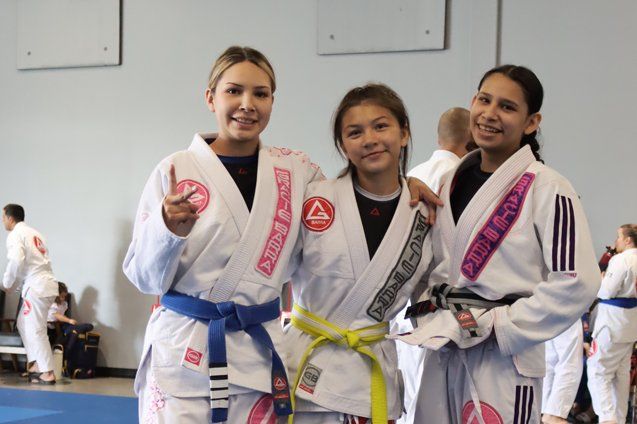
That doesn’t erase a size difference. But leverage, position, and timing genuinely shift the math in a way that striking doesn’t. This is why BJJ is so widely recommended for women and for anyone who won’t be the biggest person in the room.
4. It gives you options between nothing and serious harm
This one gets overlooked and I think it’s the most important.
Most martial arts give you two settings: do nothing, or hurt someone. That’s a bad menu. Real situations are often messy — a drunk relative, an escalating argument, a confrontation you’d like to end without anyone being injured or arrested.
Jiu-Jitsu lets you control a person without striking them. Hold them, immobilize them, disengage, walk away. It’s the reason law enforcement and security professionals train it, and it’s why “Brazilian Jiu-Jitsu & Self-Defense” appears in the name of so many Gracie Barra schools — the self-defense component is in the curriculum, not a separate seminar.
Where BJJ Doesn’t Help — The Honest Part
Any instructor who tells you their art covers everything is selling something.
Multiple attackers. Going to the ground with one person while another is standing is a bad outcome. BJJ training that ignores this does you a disservice. The correct answer against multiple people is to create distance and leave — and good self-defense instruction teaches that explicitly.
Weapons. A knife or a firearm changes the situation completely. There are Jiu-Jitsu responses to weapon scenarios, and they’re worth training, but nobody should walk out of a BJJ class believing they’ve solved the problem of a weapon. Compliance and escape are usually the right answer.
Hard surfaces. Ground technique on a padded mat and ground technique on concrete or asphalt aren’t the same. The principles hold; the consequences of taking a fall don’t.
Striking. BJJ has no striking. If someone keeps distance and throws punches, that’s a range you haven’t trained. This is precisely why BJJ and striking arts complement each other so well, and we cover the relationship in BJJ vs MMA.
Everything before the physical part. Awareness, de-escalation, and simply leaving are more valuable than any technique, because they prevent the situation entirely. No martial art substitutes for those, and the best self-defense instruction says so first.
The Benefit Nobody Advertises: Not Panicking
Here’s what I actually see change in students, and it isn’t technical.
The first time someone puts weight on your chest and controls your arms, your body responds with panic. Heart rate spikes, breathing goes shallow, you burn all your energy in fifteen seconds of thrashing. That’s an involuntary response and it’s the reason most people can’t use anything they know under pressure.
Train Jiu-Jitsu for a few months and that response starts to fade. Not because you’re braver — because your nervous system has been in that situation two hundred times and stopped classifying it as an emergency.
That’s the real self-defense benefit. Techniques are useless if you can’t access them. Composure under pressure is what makes everything else available to you, and it’s the one thing you cannot learn from a weekend seminar or a video.
It also transfers off the mat, in ways students describe more often than they expect.
How Long Before Jiu-Jitsu Is Useful?
Honest timeline, assuming two or three classes a week:
Months 1–3. You learn to stay calm under pressure and to escape a few basic positions. Not much technical capability yet, but the panic response is already fading. That alone is meaningful.
Months 4–12. Escapes become reliable. You can protect yourself from a bad position and get back to your feet. Against an untrained person of similar size, you have real advantages.
Year 2 and beyond. Control becomes reliable rather than reactive. You can manage a situation instead of just surviving it.
Nobody becomes capable in six weeks. Anyone promising that is lying to you. But the useful part — composure — arrives much earlier than the technical part.
Self-Defense at Gracie Barra Denver
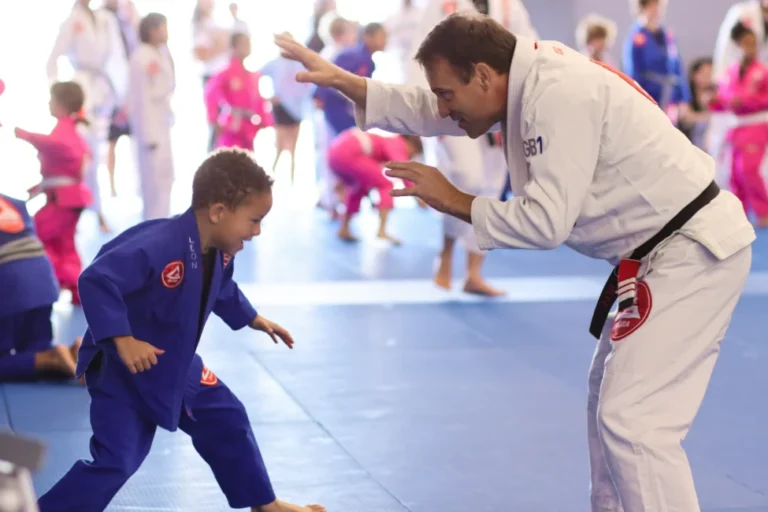
Self-defense is built into the Gracie Barra curriculum rather than offered as a separate course. Grip escapes, standing defense, getting back to your feet, and defending from the ground are taught alongside the sport techniques, from the fundamentals level onward.
The curriculum was developed by Grand Master Carlos Gracie Jr. over more than forty years and is taught the same way across 1,300+ schools worldwide. More on how that structure works in what is Gracie Barra.
We serve Denver and the surrounding Colorado communities from [Studio Address], with programs for [confirm: adultos, mulheres, crianças, no-gi] and [confirm: horários].
Come Test It Yourself
You can read about whether Jiu-Jitsu works, or you can spend an hour finding out. Your first class is free — no obligation, no sales pressure.
Athletic clothes with no zippers or pockets, a water bottle, short nails. We’ll lend you a gi. If you’d like to know exactly what the hour looks like first, we wrote a minute-by-minute walkthrough.
[Book your free class here]([Booking Link]) or call [Phone].
— Prof. Valerio Ubaldini, Gracie Barra Denver
Frequently Asked Questions
Is Brazilian Jiu-Jitsu effective for self-defense?
Yes, particularly for close-range and ground situations, which is where most physical confrontations end up. Its main advantage is that techniques are trained against fully resisting partners, so students learn what genuinely works rather than what works on a cooperative partner.
Is BJJ better than karate or taekwondo for self-defense?
They cover different ranges. Striking arts train distance; BJJ trains grappling and ground control. BJJ’s edge is that it can be practiced at full resistance safely, which builds tested skill faster. The most complete preparation combines both.
Does Jiu-Jitsu work against a bigger opponent?
It’s the situation the art was designed around. Leverage, position, and timing meaningfully reduce a size advantage, though they don’t erase it. Technique differences matter more than size differences between trained and untrained people.
Can Jiu-Jitsu defend against multiple attackers?
Not well, and no honest instructor claims otherwise. Going to the ground with one person while others are standing is dangerous. Against multiple people, creating distance and leaving is the correct response.
How long does it take for Jiu-Jitsu to be useful for self-defense?
Composure under pressure develops within the first few months, and it’s the foundation everything else rests on. Reliable escapes typically take four months to a year of consistent training two or three times a week.
Does Gracie Barra teach self-defense specifically?
Yes. Self-defense techniques — grip escapes, standing defense, and returning to your feet — are part of the core Gracie Barra curriculum from the fundamentals level onward, rather than being a separate seminar.
Is Jiu-Jitsu good for women’s self-defense?
It’s one of the most directly applicable options, because it specializes in escaping and controlling from close range and from underneath, and because it relies on leverage rather than strength.