Hi, I’m Professor Valerio Ubaldini, head professor at Gracie Barra Denver.
Most people who want to try Brazilian Jiu-Jitsu wait months before they actually walk in. Not because of the training — because of the unknown. What do I wear? Will everyone stare at me? What if I’m terrible?
So let me remove the unknown entirely. Here’s exactly what your first class looks like, minute by minute.
Before You Arrive
What to wear
Athletic clothes with no zippers, buttons, or pockets. Zippers cut people and pockets catch fingers — that’s the only reason for the rule.
Shorts and a t-shirt work. Leggings and a fitted top work. Rash guard if you have one; if you don’t, a normal t-shirt is fine.
You do not need to buy a gi. We’ll lend you one for your trial class. Buying a gi before you know if you like the sport is the most common waste of money in Jiu-Jitsu.
What to bring
- A water bottle
- Flip-flops or slides if you have them (for walking off the mat)
- Nothing else
Two things to do beforehand
Trim your nails — fingers and toes. This is the single most enforced hygiene rule in Jiu-Jitsu, because long nails scratch training partners.
Eat light, or not at all, in the hour before. A full stomach and someone’s weight on your ribs don’t combine well.
Leave the jewelry at home
Rings, earrings, necklaces, watches all come off. Easier to leave them in the car than to keep track of them.
The First Ten Minutes
Arrive ten minutes early. This is genuinely important — not because we’re strict about time, but because those ten minutes are when I introduce myself, show you where things are, and answer questions without the class waiting.
Here’s what happens:
- Someone greets you at the front desk and you fill out a short waiver.
- You get changed. We’ll hand you a loaner gi and show you how to tie the belt — everyone needs to be shown; it’s not obvious.
- Shoes come off before you step near the mat. This is universal in Jiu-Jitsu: shoes never touch the mat, and bare feet never touch the bathroom floor.
- I’ll introduce you to a few students and assign you a training partner for the class — usually an experienced student whose job is to look after you.
You will not be left standing alone wondering what to do. If a school does leave you standing alone, that tells you something about the school.
The Class Itself
A typical fundamentals class runs about an hour and follows the same shape every time.
Warm-up (10 minutes)
Movement drills specific to Jiu-Jitsu — shrimping, bridging, rolling backward and forward. These look strange the first time. They’re the base movements of everything you’ll learn later.
You can scale anything. Nobody expects a first-timer to keep pace.
Technique instruction (20–25 minutes)
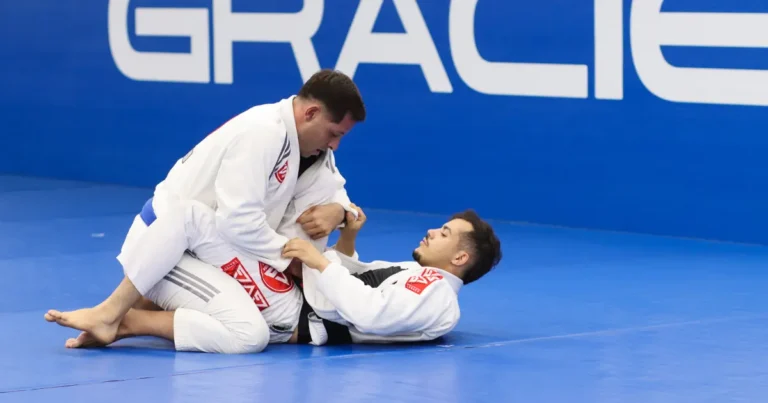
I demonstrate a technique, break it into steps, then you drill it with your partner. You’ll each do it several times, slowly, while I move around correcting.
You will not remember it. Let me say that clearly, because it’s the thing beginners are most self-conscious about. Your brain is processing an enormous amount of new information and there’s no capacity left for retention. It comes back around — the curriculum cycles.
Your partner will help you. That’s expected of them, and it’s how the room works.
Positional drilling (10 minutes)
Starting from a specific position and working a single objective — escape this pin, hold this position. Lower pressure than full sparring, and this is where beginners learn fastest.
Live training, or “rolling” (10–15 minutes)
Rounds of five to six minutes against a partner who is actively resisting.
As a first-timer, you have two options and both are completely normal: roll with an upper belt who will guide you, or sit out and watch. Nobody will pressure you either way. Plenty of people sit out on day one.
If you do roll, the only rule you need is this: tap when you’re caught. Two clear taps on your partner, or say “tap” out loud. The round stops instantly, no explanation needed, no judgment attached. You can also tap for any other reason — you’re tired, you’re uncomfortable, something feels wrong. It always works.
Bow out and closing (2 minutes)
The class lines up, we bow, and that’s it. Someone will probably ask how it went. Someone else will probably introduce themselves.
What It’s Actually Going to Feel Like
I’d rather you know this in advance than be surprised.
You’ll be more tired than you expect. Jiu-Jitsu fatigue is a different currency from running or lifting — it’s grip, breath, and the constant low-level effort of managing weight. Add Denver’s altitude and the first class is humbling regardless of your fitness level. It gets much better in four to six weeks.
You’ll be sore in strange places. Neck, forearms, and hips are the usual suspects. It fades after the first few sessions.
You’ll feel awkward and out of place. Everyone does. The black belt teaching you felt exactly the same way once.
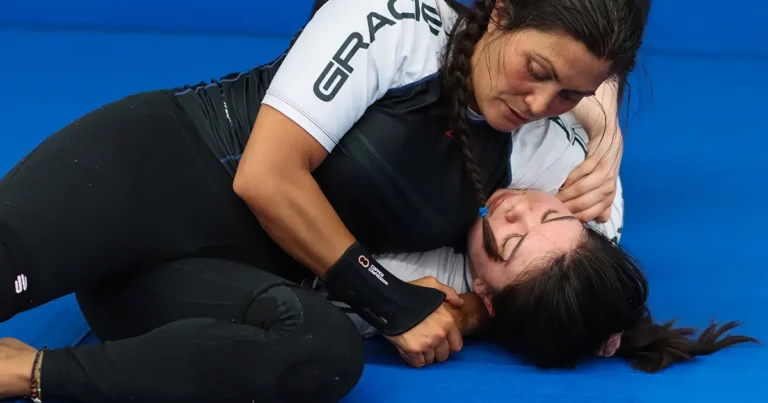
Someone smaller will control you completely. This is the moment that makes most people come back. It’s the clearest possible demonstration that this is about technique, not size.
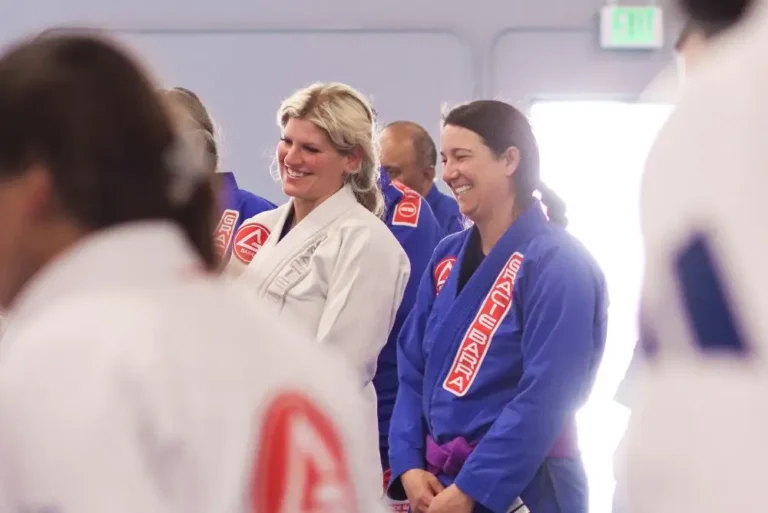
Nobody is judging you. I know that’s what people always say. But specifically: everyone in that room was a nervous beginner, most of them recently. The room is genuinely happy you showed up.
Mat Etiquette in One List
Everything you need to know to not accidentally break a rule:
- Shoes off before stepping on the mat; sandals on when you leave it
- Bow when entering and leaving the mat
- Clean gi, clean body, trimmed nails, every session
- No jewelry
- Tap early — there is no benefit to holding out
- If you have an injury or condition, tell your partner and the instructor before the round
- Walk around a pair who are training, not between them
- If someone taps, release immediately
- Don’t coach other students — that’s the instructor’s job
Nobody expects you to know all of this on day one. You’ll be told what you need to know as you go.
After Your First Class
Give it three classes before you decide anything.
The first is sensory overload. The second, you can follow the structure. By the third, you’ll have some idea whether you like it — and that’s a much more reliable read than one session.
If you want a longer look at what the first months hold, we wrote about what nobody tells you about being a white belt.
And if you’re still comparing academies, our guide to choosing a BJJ school in Denver lays out what to look for — including how to tell a well-run room from a badly run one.
Book Your Free First Class in Denver
Your first class at Gracie Barra Denver is free. It’s an actual class, not a sales tour — you’ll train, and then you’ll go home and think about it.
We serve Denver and the surrounding Colorado communities from [Studio Address]. Beginner classes run [confirm: horários das turmas de fundamentos].
Bring athletic clothes with no zippers or pockets, a water bottle, and short nails. We’ll handle the rest.
[Book your free class here]([Booking Link]) or call [Phone].
— Prof. Valerio Ubaldini, Gracie Barra Denver
Frequently Asked Questions About Your First BJJ Class
What should I wear to my first Jiu-Jitsu class?
Athletic clothing with no zippers, buttons, or pockets — shorts and a t-shirt, or leggings and a fitted top. Bring a water bottle and trim your nails. Most academies, including Gracie Barra Denver, lend you a gi for the trial class.
Do I need to buy a gi before my first class?
No. Wait until you’ve decided you’re continuing. Trial students are lent a gi, and buying one early is the most common wasted purchase in Jiu-Jitsu.
Will I have to spar on my first day?
Only if you want to. Beginners are welcome to sit out live training entirely, or to roll with an experienced upper belt who will guide the round. Both are completely normal.
How long is a Jiu-Jitsu class?
Usually about an hour: warm-up, technique instruction, positional drilling, then live training. Fundamentals classes tend to weight the technique and drilling portions more heavily.
What if I’m not in shape?
That’s the normal starting condition. Every part of class is scalable, and beginners are expected to rest when they need to. Conditioning improves noticeably within the first month or two.
Is it normal to feel lost in your first class?
Completely. First-time students typically retain very little of the technique taught, because attention is spent on staying calm and following along. The curriculum cycles, so everything comes back around.
How do I tap in Jiu-Jitsu?
Tap your partner clearly two or more times with your hand, or say “tap” out loud. The round stops immediately. You can tap for any reason at all, including simply being tired or uncomfortable.