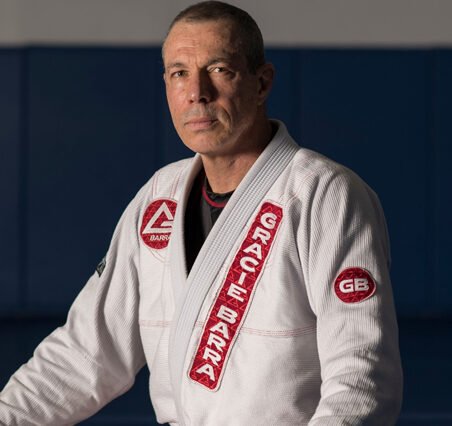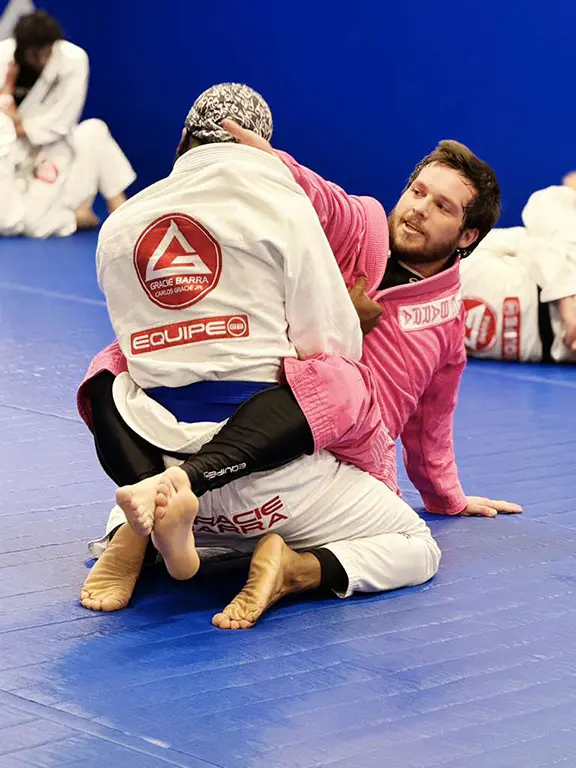
Hi, I’m Professor Valerio Ubaldini, head professor at Gracie Barra Denver.
Parents come to me with wildly different reasons. Some have a child being bullied. Some have a child with too much energy and nowhere to put it. Some have a shy kid they’d like to see stand a little taller. A few just want their child off a screen for an hour.
All of those are good reasons, and Jiu-Jitsu handles all of them — but not always in the way parents expect.
Here’s what I’ve actually seen happen with kids on our mats, and what I’d want to know if I were the one signing my child up.
1. Confidence That’s Built on Evidence, Not Praise
This is the benefit parents notice first, and it’s the one that gets described the most vaguely. Let me be specific about the mechanism.
Kids hear that they’re capable constantly. From parents, teachers, coaches. It rolls off, because encouragement isn’t proof.
Jiu-Jitsu gives them proof. A child struggles to escape a position for three weeks. Then one day, she escapes it. Nobody let her — she did it against a partner who was genuinely trying to hold her. That’s evidence, and children know the difference between evidence and encouragement.
Stack up enough of those moments and the change isn’t “my child feels better about herself.” It’s “my child has data that she can solve hard things.” That’s a different and much more durable thing.
The shy kids are usually the ones where the change is most visible. It rarely shows up as a child becoming loud. It shows up as a child who stops shrinking.
2. Anti-Bullying Skills That Don’t Require Hitting Anyone
This is the reason a lot of parents come in, and it’s worth being precise about how Jiu-Jitsu actually helps — because it’s not what most people picture.
It’s not about fighting back. Most striking-based arts give a child exactly one physical option: hurt the other kid. That option gets the child suspended, escalates the situation, and often doesn’t work anyway.
Jiu-Jitsu gives options in between. A child who knows how to control a situation can stop it without throwing a punch — hold someone at a distance, escape a grab, get back to their feet, walk away. That’s a far better outcome for everyone, and it’s the outcome schools and parents actually want.
The physical skill isn’t the main deterrent. This is the part that surprises people. Most bullying stops before it becomes physical, and what stops it is posture, eye contact, and a kid who doesn’t look like an easy target.
Children who train regularly carry themselves differently. They’re used to physical pressure and don’t panic when someone gets in their space. That reads clearly to other kids, and it usually ends the problem before it starts.
They also learn restraint. Every class reinforces control. Kids learn that the goal is to manage a situation, not to win a fight. In my experience, students who train are less likely to get into fights, not more.
3. Focus and Discipline That Transfer to School
Jiu-Jitsu class has a structure, and the structure does a lot of work.
Kids bow onto the mat. They line up. They pay attention to an instruction, then execute it. They train with a partner and have to consider that partner’s safety. There’s a clear standard and it’s applied consistently.
For a child who struggles to sit still, this is unusually effective — because it’s not asking them to be still. It’s asking them to channel enormous physical energy into precise, controlled movement. That’s a much easier ask than “sit quietly,” and it builds the same underlying skill.
Parents regularly tell us about homework and classroom feedback improving. I want to be careful not to overclaim here — Jiu-Jitsu isn’t a treatment for anything. But the ability to receive an instruction, focus on it, and follow through is trained every single class, and it doesn’t stay on the mat.
The belt system supports this too. Progress is earned through attendance and demonstrated skill over months. There’s no shortcut, and kids learn what a long-term goal feels like — which is genuinely hard to teach any other way.
4. Real Fitness, Without Any of It Feeling Like Exercise
Getting a child to exercise is a negotiation. Getting a child to play a game where they happen to be exercising is not.
An hour of Jiu-Jitsu develops:
- Coordination and body awareness — kids learn where their limbs are in space, which improves everything else they do physically
- Functional strength — grip, core, and hips, built through movement rather than lifting
- Cardiovascular fitness — live rounds are demanding, and kids don’t notice because they’re playing
- Balance and flexibility — constant, from day one
- How to fall safely — an underrated skill that pays off on bikes, playgrounds, and every other sport
And unlike most youth sports, nobody sits on a bench. Every child is training the entire class. There’s no roster, no cut, no waiting for a turn.
It’s also a sport a child can carry into adulthood. Most youth sports end at 18. Jiu-Jitsu students often train for life — some of our adult students started as kids.
5. A Social Environment With Different Rules
This one gets underrated, and for certain kids it’s the biggest benefit of all.
School social dynamics are largely about status. Jiu-Jitsu mats aren’t, because the hierarchy is completely visible and based on something objective: your belt, your skill, and how long you’ve trained. There’s no argument about it.
That does something interesting to kids. Nobody is confused about where they stand, so there’s much less to compete about socially. The older, more skilled kids are expected to help the newer ones — that’s the culture, and we enforce it deliberately.
Children also learn what respect looks like as a practice rather than a lecture. They shake hands with someone who just beat them. They help up a partner they just swept. They’re trained with someone smaller and told explicitly that their job is to make that person better, not to dominate them.
For a child who doesn’t fit neatly into the school social order, walking into a room where the rules are clear and effort is what counts can be a significant relief.
What Parents Usually Want to Know
Is Jiu-Jitsu safe for children?
It’s one of the safer contact activities available, and the reason is structural. There’s no striking, so no head impacts. Techniques dangerous for developing joints are removed from the kids’ curriculum entirely. Live training is supervised and matched by size and experience, and tapping stops everything immediately.
Compared to youth football, hockey, or even soccer, the injury profile is favorable. That said, it’s a contact sport — scrapes, mat burns, and sore muscles come with it.
What age can a child start?
Kids can start [confirm: idade mínima da GB Denver — Gracie Barra Kids normalmente começa aos 4]. The youngest groups look more like structured play — coordination games, falling safely, listening to instructions. Technical work comes gradually as kids get older.
Classes are grouped by age so a six-year-old is never training with a twelve-year-old.
My child is shy / not athletic / doesn’t like sports
Those are the students I most want to see, honestly. Jiu-Jitsu doesn’t require athleticism to start, there’s no bench, and there’s no team to let down. Progress is measured against their own last month.
Shy kids often take three or four weeks to warm up. That’s normal, and it’s not a sign it isn’t working.
Will this make my child aggressive?
The opposite, in my experience. Kids who train have nothing to prove, and they’re the ones who’ve been taught most explicitly that control matters more than winning. Confidence tends to reduce aggression rather than feed it — most fights start from insecurity.
How often should a child train?
Twice a week is the sweet spot for most kids. It’s enough to build skill and habit without crowding out school and family time.
How Kids Classes Work at Gracie Barra Denver
We teach the Gracie Barra Kids curriculum — the same structured method used across 1,300+ Gracie Barra schools worldwide, refined by Grand Master Carlos Gracie Jr. over more than forty years.
What that looks like day to day:
- Classes are grouped by age, so kids train with peers at a similar stage.
- The curriculum is progressive. Kids know what they’re working toward and why. Belts and stripes are earned, not handed out.
- Behavior standards apply on and off the mat. Respect at home and effort at school are part of the program, not separate from it.
- Parents can watch. You’ll see exactly what your child is doing, every class.
- Self-defense is built in, taught as control and escape rather than as fighting.
We serve Denver and the surrounding Colorado communities from [Studio Address]. Kids classes run [confirm: horários das turmas infantis].
Bring Your Child for a Free Class
The best way to know if this fits your child is to let them try it. Their first class is free, with no obligation.
They’ll need athletic clothes with no zippers or pockets, and a water bottle — we’ll lend them a gi. Arrive ten minutes early and I’ll introduce them to the group personally so they’re not walking in cold.
[Book a free kids class here]([Booking Link]) or call us at [Phone].
— Prof. Valerio Ubaldini, Gracie Barra Denver
Frequently Asked Questions About Kids Jiu-Jitsu
What age can kids start Brazilian Jiu-Jitsu?
Most Gracie Barra schools start children at [confirm: idade mínima], with classes grouped by age so younger children train with peers. Early classes focus on coordination, falling safely, and following instructions rather than technical detail.
Is Jiu-Jitsu safe for kids?
Yes, comparatively. There is no striking and no head contact, dangerous joint techniques are excluded from the kids’ curriculum, training is supervised and matched by size, and tapping stops a round immediately.
Does Jiu-Jitsu help with bullying?
Yes, and mostly before anything physical happens. Children who train carry themselves with more confidence, which deters most bullying on its own. If a situation does become physical, Jiu-Jitsu gives a child options to control and escape without striking anyone.
How often should my child train Jiu-Jitsu?
Twice a week works well for most children. It builds real skill and consistency without overwhelming school, homework, and family schedules.
Will Jiu-Jitsu make my child more aggressive?
Generally the opposite. The curriculum emphasizes control and restraint, and children who feel capable have less need to prove anything. Instructors reinforce that these skills are for protection, never for starting conflict.
What does my child need for their first class?
Athletic clothing without zippers or pockets, a water bottle, and trimmed nails. Gracie Barra Denver provides a gi for the free trial class.
Can Jiu-Jitsu help a child with focus or excess energy?
Many parents report improvements. Classes channel physical energy into precise, controlled movement while training a child to receive an instruction and follow through. It’s not a treatment for any condition, but the structure suits high-energy kids well.